By Rebecca Clark
Seventeen years ago, I stood in front of a stage at an amphitheater watching a young woman named Lzzy Hale and her band Halestorm open a radio festival, and my jaw dropped. Her voice was impossible to ignore. At the time, Hale wasn’t headlining arenas yet, and the band was still in the early stages of its career. But even then, there was something special about her that was impossible to deny. It was more than the so-called “it” factor, it was the passion, the drive, and the heart she poured into every note, every lyric, and every moment she spent on that stage.
And now, Hale is one of the featured artists honored in the Rock & Roll Hall of Fame’s Women in Metal: You Will Know My Name exhibit, a recognition of the impact she and so many other women have made in metal.
On the drive to Cleveland for the opening of Women in Metal: You Will Know My Name, my sister Renee and I found ourselves reminiscing about those early Halestorm shows and all the years we had spent following the band’s journey. Walking into the Rock Hall that evening felt like more than the opening of a new exhibit. It felt like witnessing decades of perseverance, from Hale, from the women whose stories filled the exhibit were finally receiving the recognition they had long earned.
In many ways, it felt like the Rock Hall was finally showing the world what I had seen in Hale all those years ago.
The exhibit is a celebration of a community that has spent decades proving that heavy music has never belonged to one gender, one generation, or one definition of what a metal musician should look like. That feeling only grew stronger once Halestorm’s Lzzy Hale stepped out onto the Rock Hall’s outdoor PNC Stage.
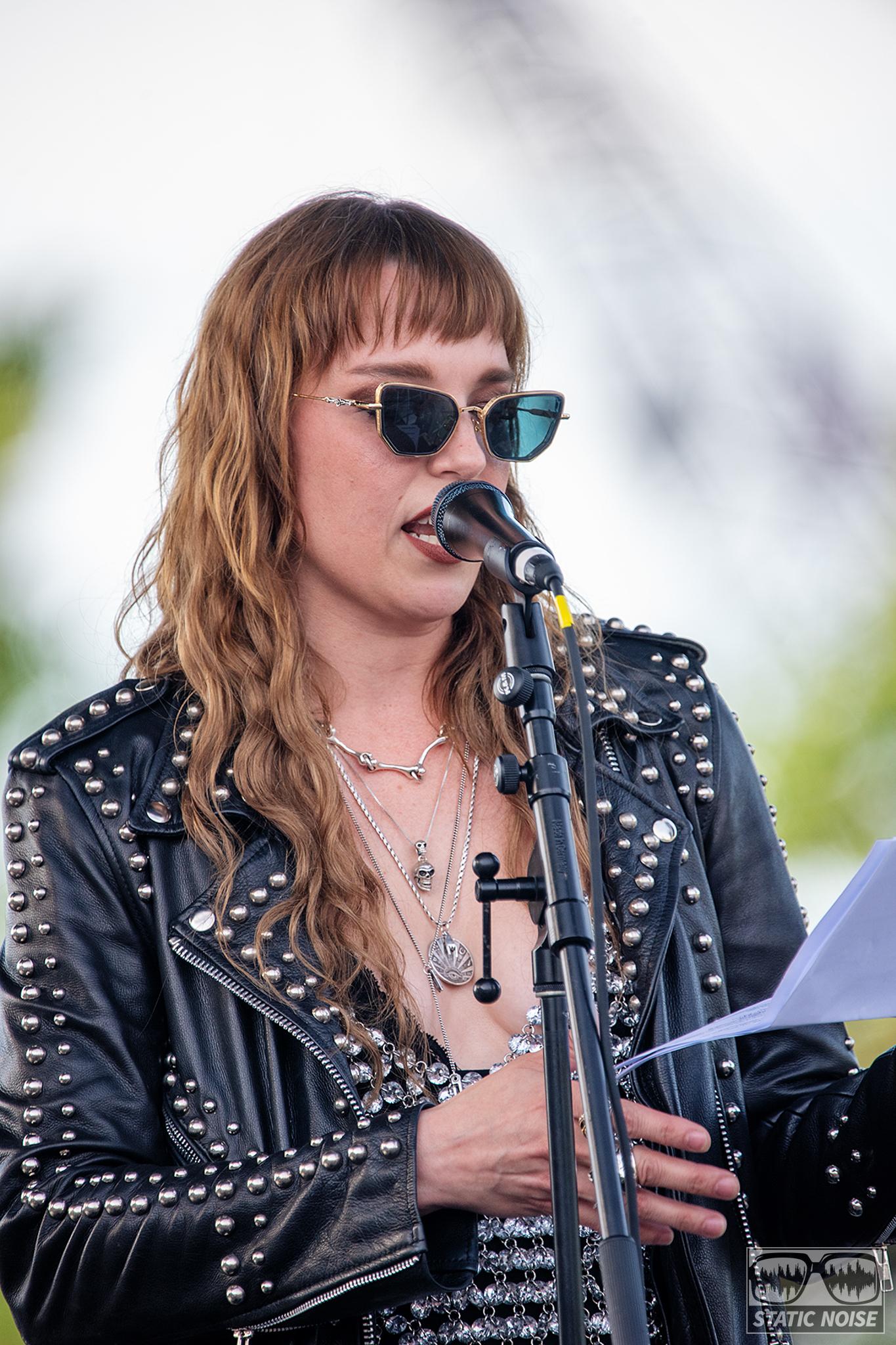
Hale’s welcome speech, which doubled as her dedication of the exhibit, was inspiring and deeply personal. “Standing here tonight is one of the strangest, most humbling, most beautiful moments of my life,” she told the crowd. “When I was a little girl growing up in farmland Pennsylvania, I could have never dreamed of being in a museum. But I dreamt about being loud.”
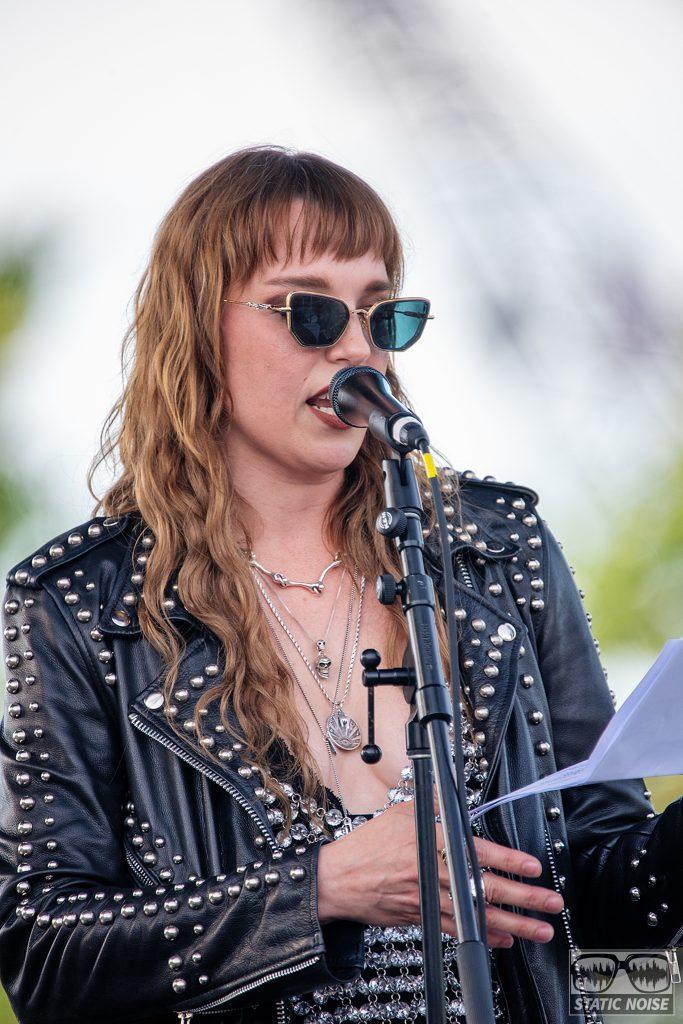

She talked about growing up loving rock and metal “because those genres never asked permission. They were rebellious, fearless, emotional and unapologetic.” What she didn’t always see growing up, she said, was someone who looked like her, but there were women: “women who carved out their own path, women who climbed through windows when the doors wouldn’t open, women who were told they were too loud, too aggressive, too emotional, too ambitious, too feminine, too masculine, too much of something or not enough of something else.” Every time a label passed on signing a woman in metal, every time radio claimed they already had their token female artist, she said, “she cranked up the music and she did it anyway. With blood in her teeth and dirt under her nails, she held the gate open for the women fighting behind her.”
It’s a line that carries extra weight coming from Hale specifically. In 2013, she became the first woman to win the Grammy for Best Hard Rock/Metal Performance, for Halestorm’s “Love Bites (So Do I).”
“The story of women in metal is not a side story,” she told the audience. “It is the story.” She closed with a message for “the young girl who might walk through this exhibit tomorrow, maybe holding a guitar for the first time,” urging her to “take up space, make noise, write the song, start the band, miss the note, try again, but don’t ever give up,” before landing on a line that doubled as a callback to the exhibit’s title: “The amplifiers are still ringing, the lights are up, and you will know our names.”
Lzzy and Joe of Halestorm Opens the Night
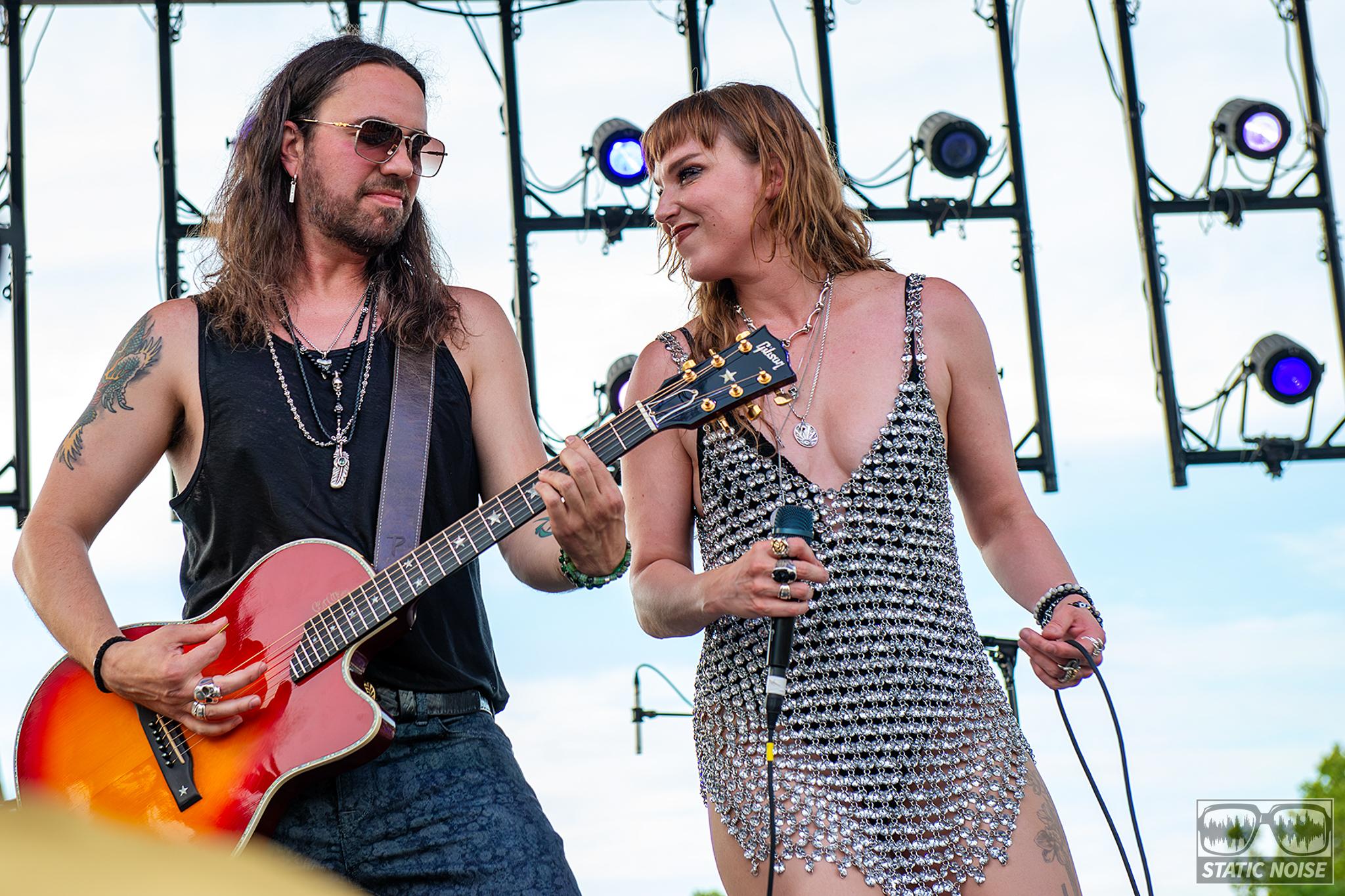
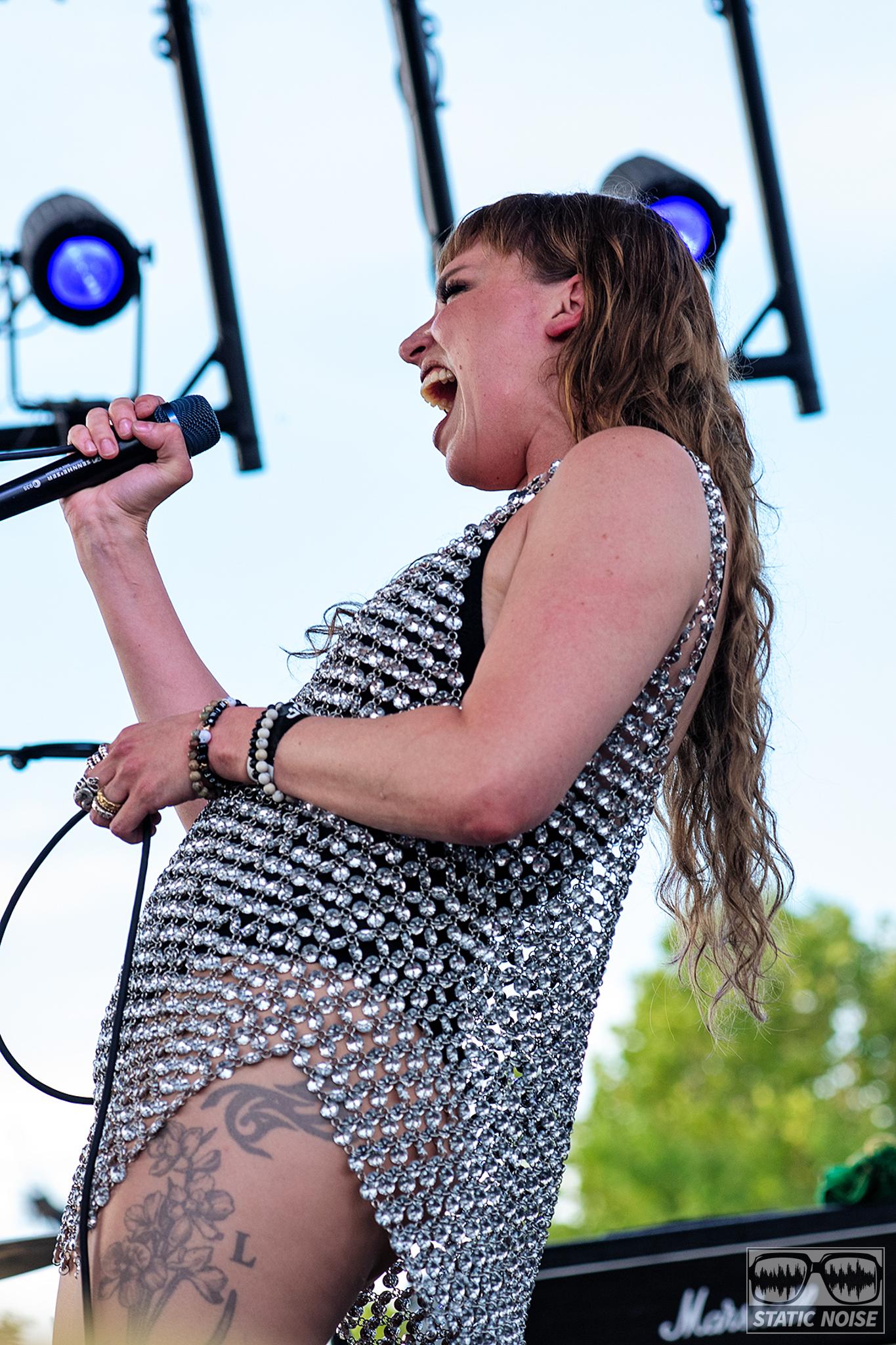
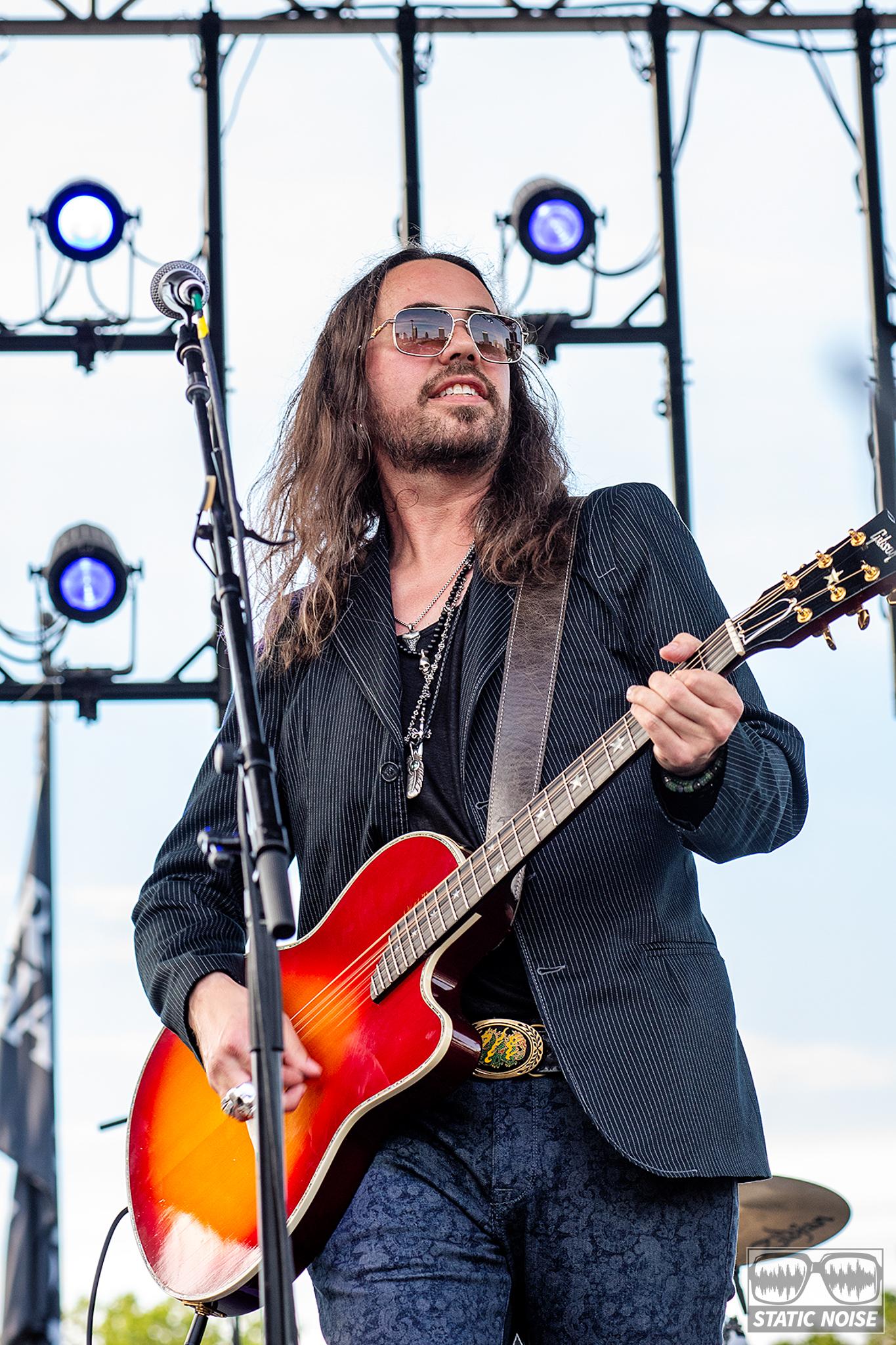
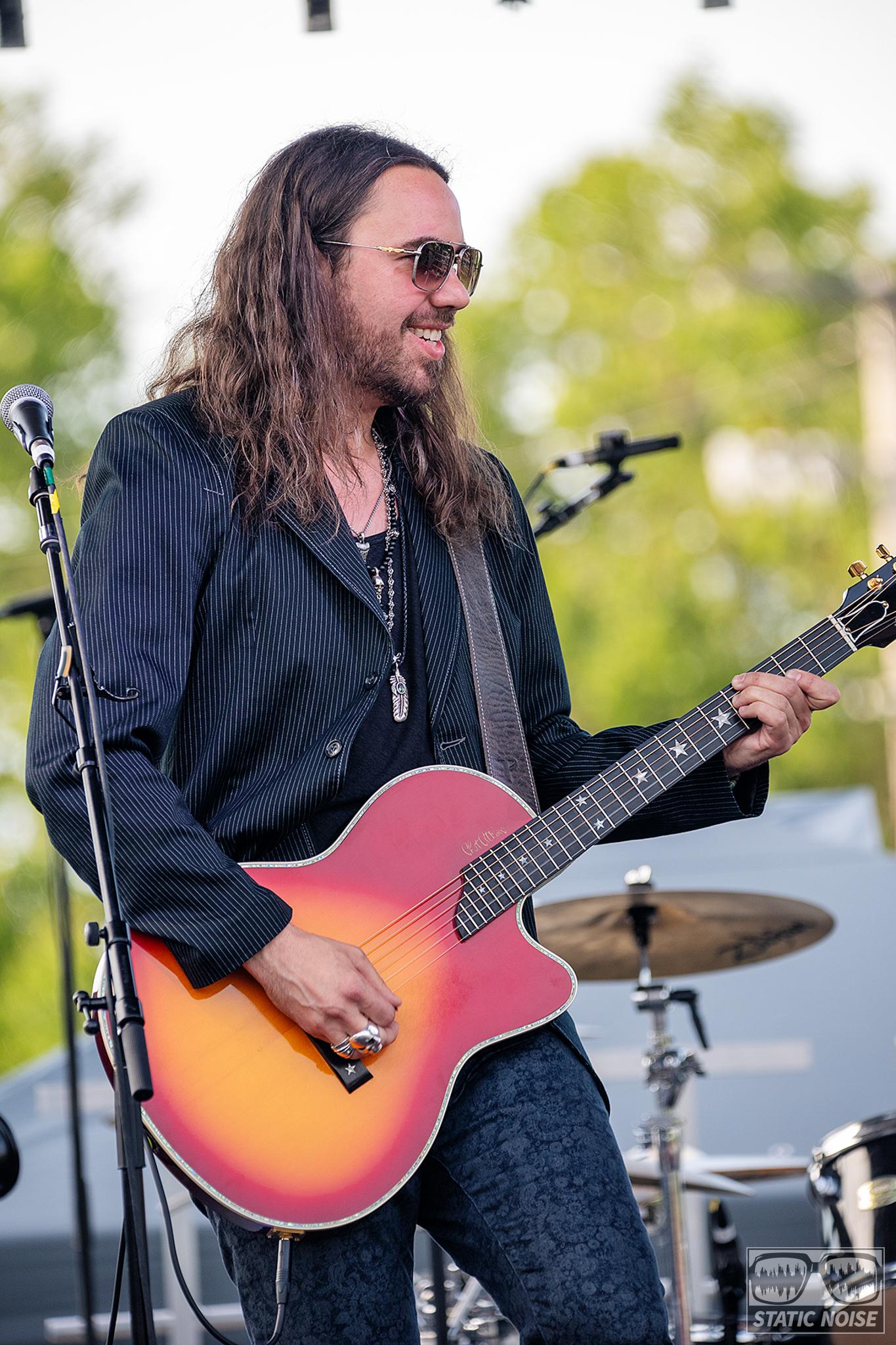
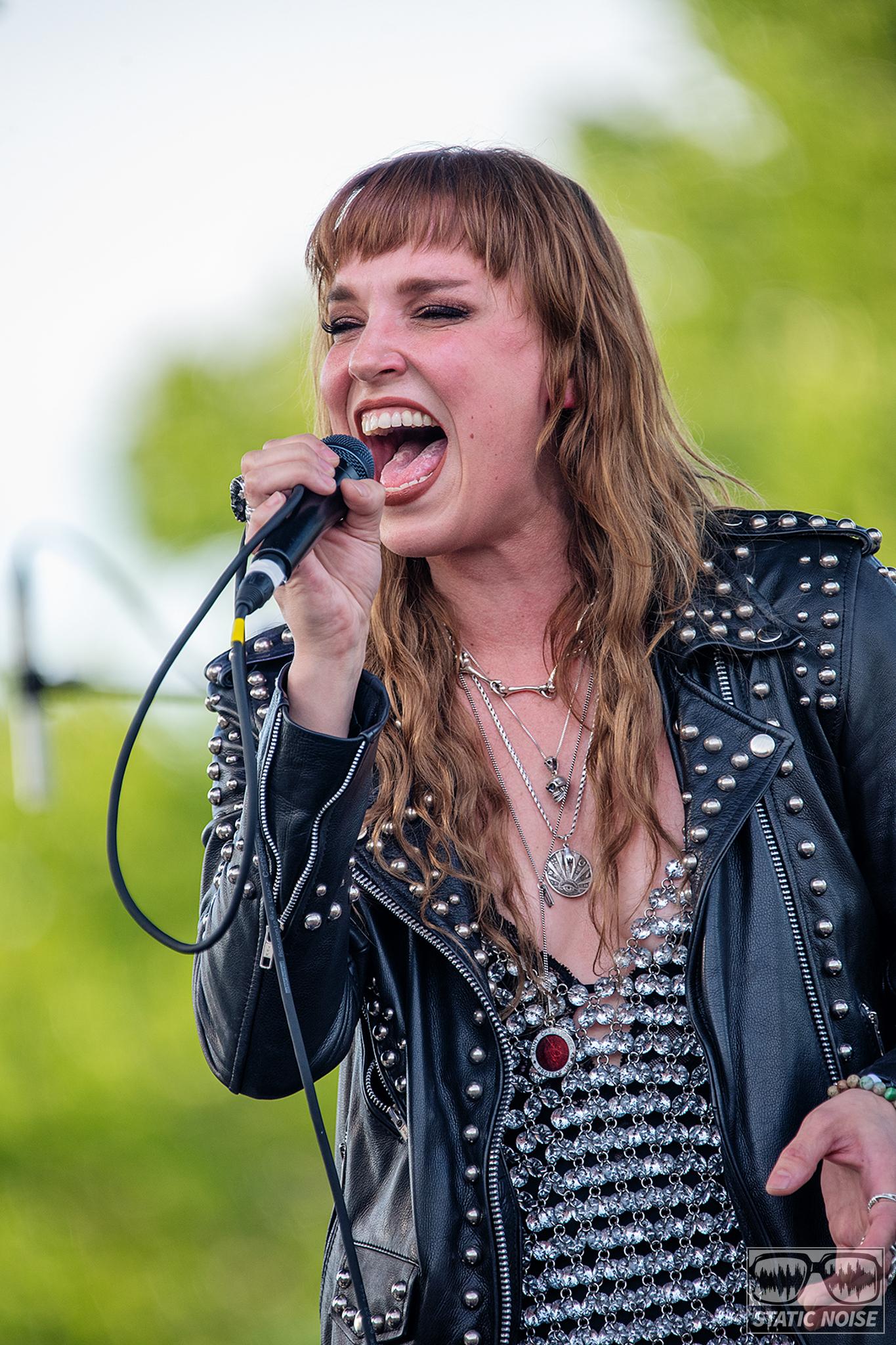
Hale’s words were still hanging over the plaza when she and guitarist Joe Hottinger took the stage and opened the night themselves. Stripped of Halestorm’s towering amplifiers and arena production, the duo reminded everyone that great songs don’t need pyrotechnics or walls of speakers to make an impact. Their set featured “Bad Girls World,” “Miss the Misery,” “Like a Woman Can,” a stirring cover of Fleetwood Mac’s “Gold Dust Woman,” “Love Bites,” and the “I Like It Heavy” outro that had the crowd singing along.
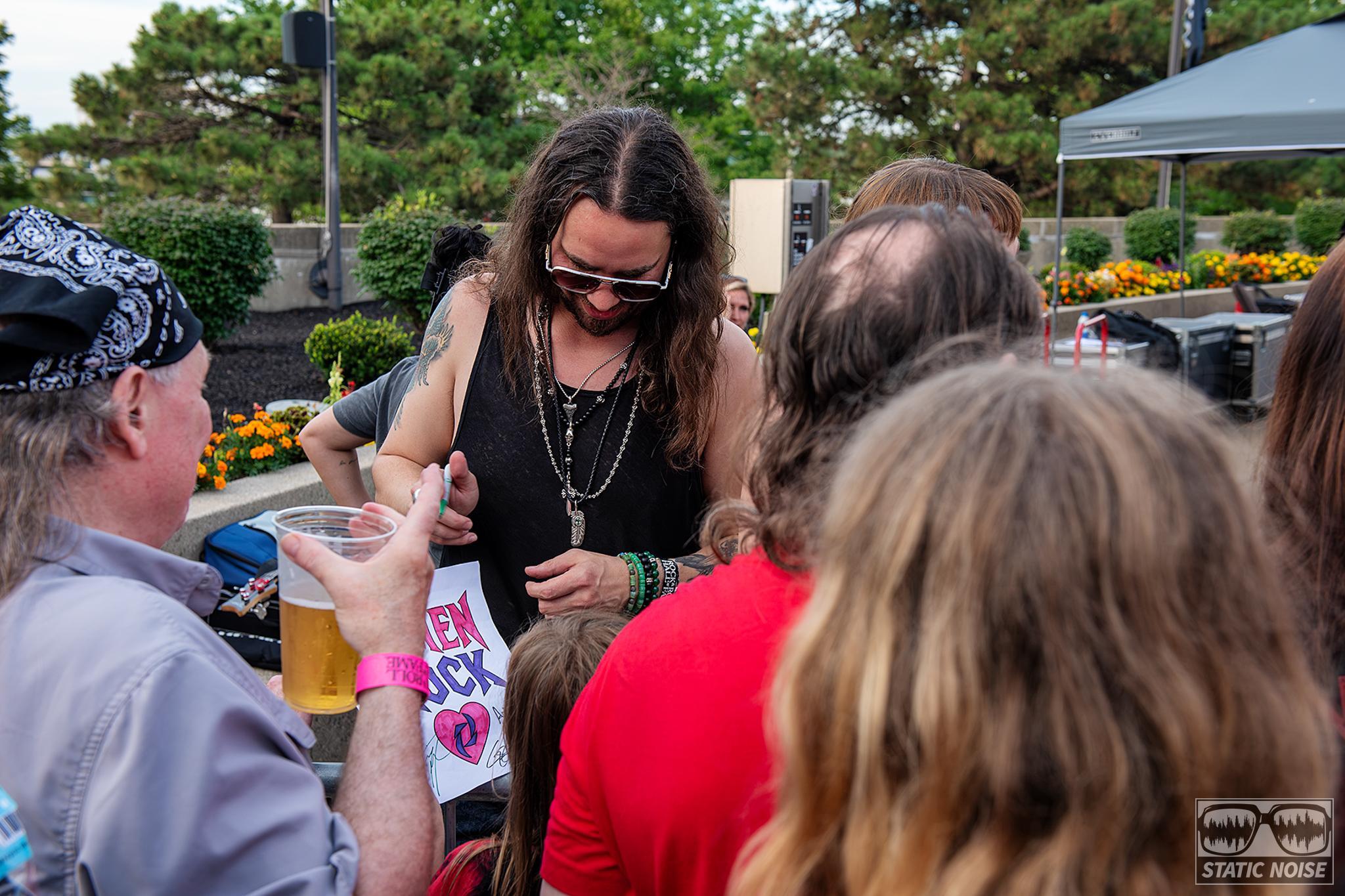
Near the front of the stage stood a young girl holding a handmade sign that said “Women Rock” with the Halestorm logo in a heart below for Lzzy Hale. Joe Hottinger noticed her first and tossed her a guitar pick. Later in the set, Hale walked over and sang directly to her, a moment that lasted only a few seconds but was impossible not to think about afterward. Maybe that girl will remember catching a guitar pick. Maybe she’ll remember Lzzy singing to her. Or maybe, years from now, she’ll remember visiting a museum where she saw women who looked like her not standing on the sidelines of rock history, but helping write it.

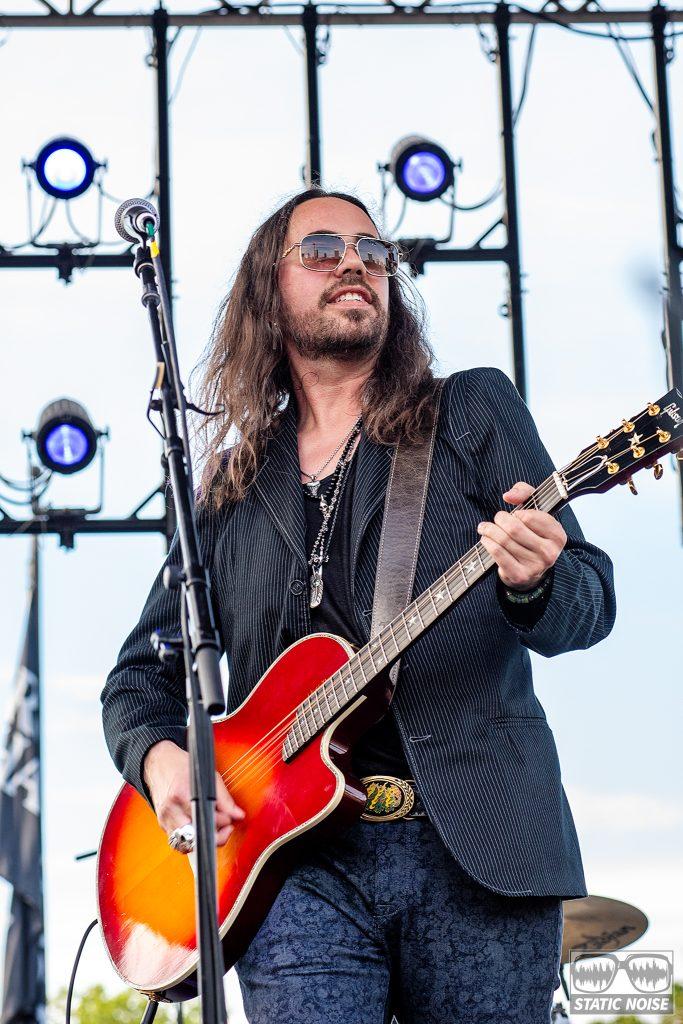
Their setlist was a fitting soundtrack for an evening dedicated to honoring women who have helped define heavy music. But the moments that lingered longest weren’t necessarily the songs. They were what came after. Long after their set ended, Hale and Hottinger stayed on the plaza, greeting fans, posing for photos, and signing memorabilia for the rest of the night. During a brief hello, Hale showed off the pendant around her neck: a stylized metal “horns” sign, a nod to Ronnie James Dio and the Italian folklore behind the gesture long before it became shorthand for the genre itself. In an era when artists of Halestorm’s stature could easily retreat backstage, she and Hottinger chose to stay present instead.
For longtime fans, that carried extra weight. I’ve been photographing and following Halestorm for nearly seventeen years, watching the band grow from smaller venues into one of the most respected names in modern hard rock and metal. I’m about the same age as Hale, and in a lot of ways I’ve grown into womanhood alongside her music; bands I loved just as much twenty years ago have faded out of my rotation, but Halestorm never has. There was something wonderfully familiar about the night, too. Meeting fans after a show used to be part of the Halestorm experience by default, and as the band’s profile grew, those chances became rarer. Getting to say hello in person again, and watching Hale and Hottinger spend so much of the evening encouraging the younger bands, brought back memories of those earlier days. Standing inside the Rock Hall, seeing Hale’s legacy preserved alongside some of the genre’s greatest trailblazers, was surprisingly emotional. It felt earned.
The Woman Behind the Vision
While Hale’s presence naturally drew much of the spotlight, another woman was quietly living a full-circle moment of her own. Haley Cronin, Assistant Curator at the Rock & Roll Hall of Fame and frontwoman of the Cleveland-based metal band MAXILLA, spearheaded the creation of Women in Metal: You Will Know My Name. By day, she researches and develops exhibits that preserve music history. By night, she takes the stage as a performer herself, and later that evening, she’d do exactly that.
For Cronin, bringing this exhibit to life was both a professional achievement and a deeply personal one. “Other than my personal passion for the subject, the team and I thought this exhibit would be a great follow-up to Revolutionary Women in Music: Left of Center. Visitors were craving authentic, untold stories of rock, and Women in Metal felt like the natural next step, especially to bring more of our metal and heavy music fans into the museum.”

That next step was no small undertaking. Cronin said the exhibit took nearly two years to develop, a timeline that’s common in the museum world but still represents thousands of hours of research, collaboration, and careful decision-making. Choosing which artists and artifacts would tell the story of women in metal was one of the biggest challenges. “There are so many incredible women who have shaped metal,” she said. “You never want to leave out any key figures. When we aren’t able to collect objects from everyone we’d like, we make an effort to represent them through text and other forms of media.”
From the beginning, one artist stood at the center of her vision. “I knew Lzzy Hale had to be the focal point of this exhibit,” Cronin said. “She is so beloved in the world of rock and metal. From there, she and her team took the idea and just ran with it, connecting me with so many other female metal artists we wanted to represent.” That collaboration became one of the exhibit’s defining strengths. Rather than simply documenting history, it brought together the very artists who continue to shape it.
Hale wasn’t Cronin’s only inspiration, either. She counts Pat Benatar, Lita Ford, Joan Jett, Alanis Morissette, Hayley Williams, Sharon den Adel, and Doro Pesch among the artists who shaped her as a musician, a lineup that stretches across roughly the same eras the exhibit itself is built around.


For Cronin, opening day carried another layer of emotion. Not only was it her solo curating debut, but she would also perform with MAXILLA later that evening in front of the musician who inspired her to pick up an instrument in the first place. “It was actually Lzzy Hale who first inspired me to play and start my own band,” Cronin said. “Having her dedicate this exhibit was a full-circle moment for me.” Any nerves she felt quickly disappeared once fans began arriving. “Seeing everyone’s faces as they walked through the exhibit and the loving community on the plaza that night… I just felt a full heart.”
MAXILLA has more ahead, too. After finishing work on a new album, the band is set to open for Vixen at the Whisky a Go Go in Los Angeles on October 29th.
More Than Memorabilia
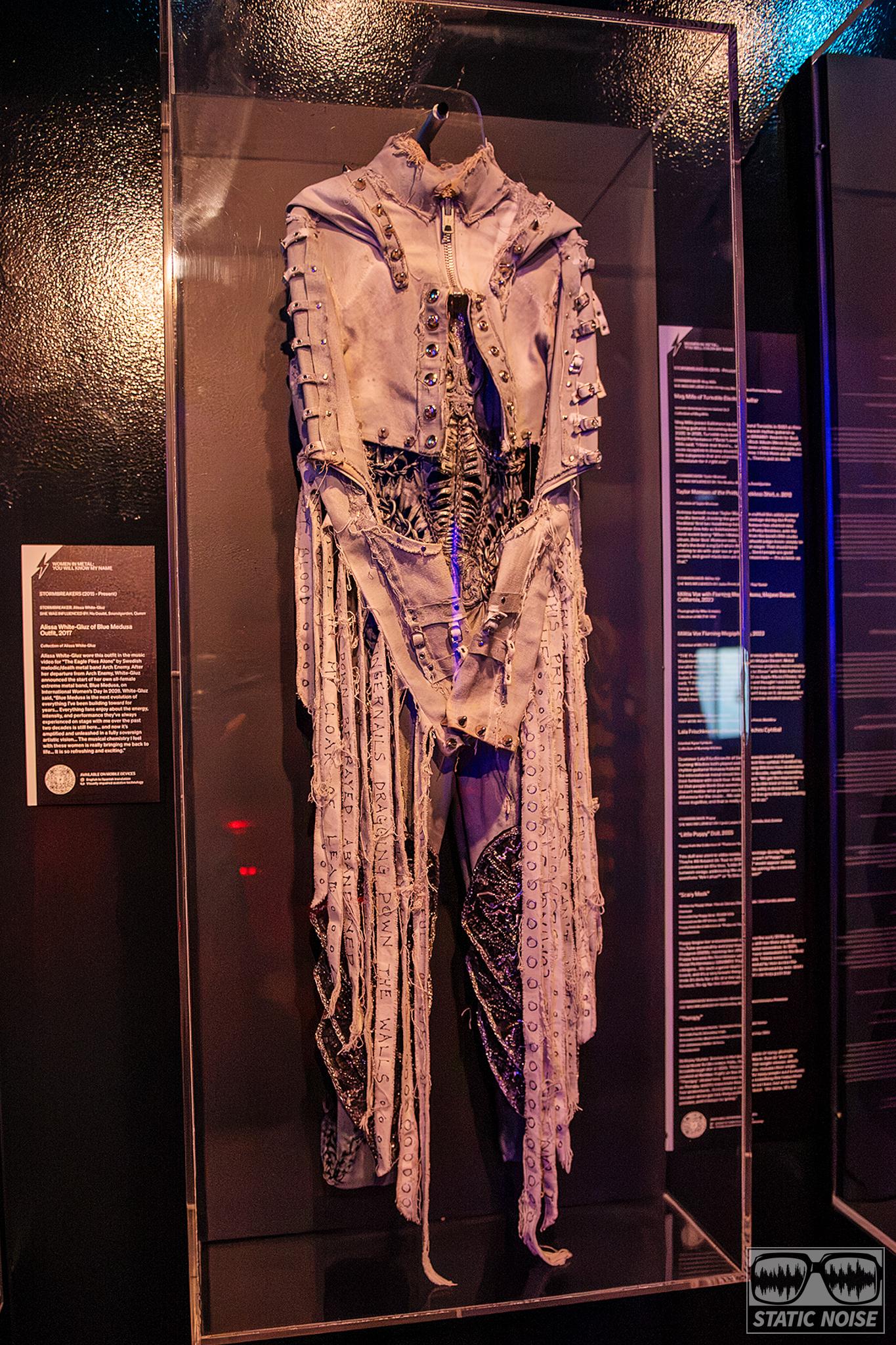
It’s easy to think of a museum exhibit as a collection of artifacts behind glass. Women in Metal: You Will Know My Name is something more. Featuring memorabilia from artists including Lita Ford, Lzzy Hale, Alissa White-Gluz, Taylor Momsen, and Courtney LaPlante, the exhibit tells the story of women who challenged expectations and helped redefine heavy music across generations, rather than presenting a simple timeline of artists and albums.
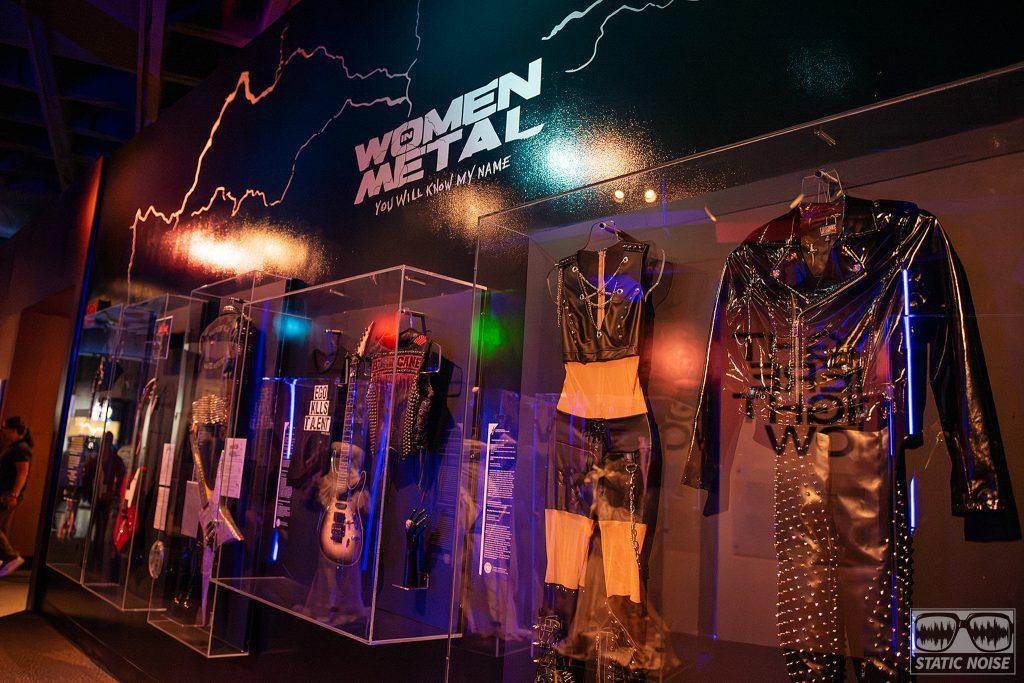
That approach echoes one of the most powerful lines from Hale’s speech: “We are not asking for a seat at the table. We are building the next table.” It also reflects exactly what Cronin hopes visitors take away from the exhibit. “I hope that anyone who walks through this exhibit leaves knowing that there is always a place where they belong,” she said. “All the women represented here have shared stories of feeling like outcasts, but through their accomplishments we see that they empowered themselves and each other to carve their own paths. In turn, they created a home for every other metal misfit.”
Walking Through the Exhibit
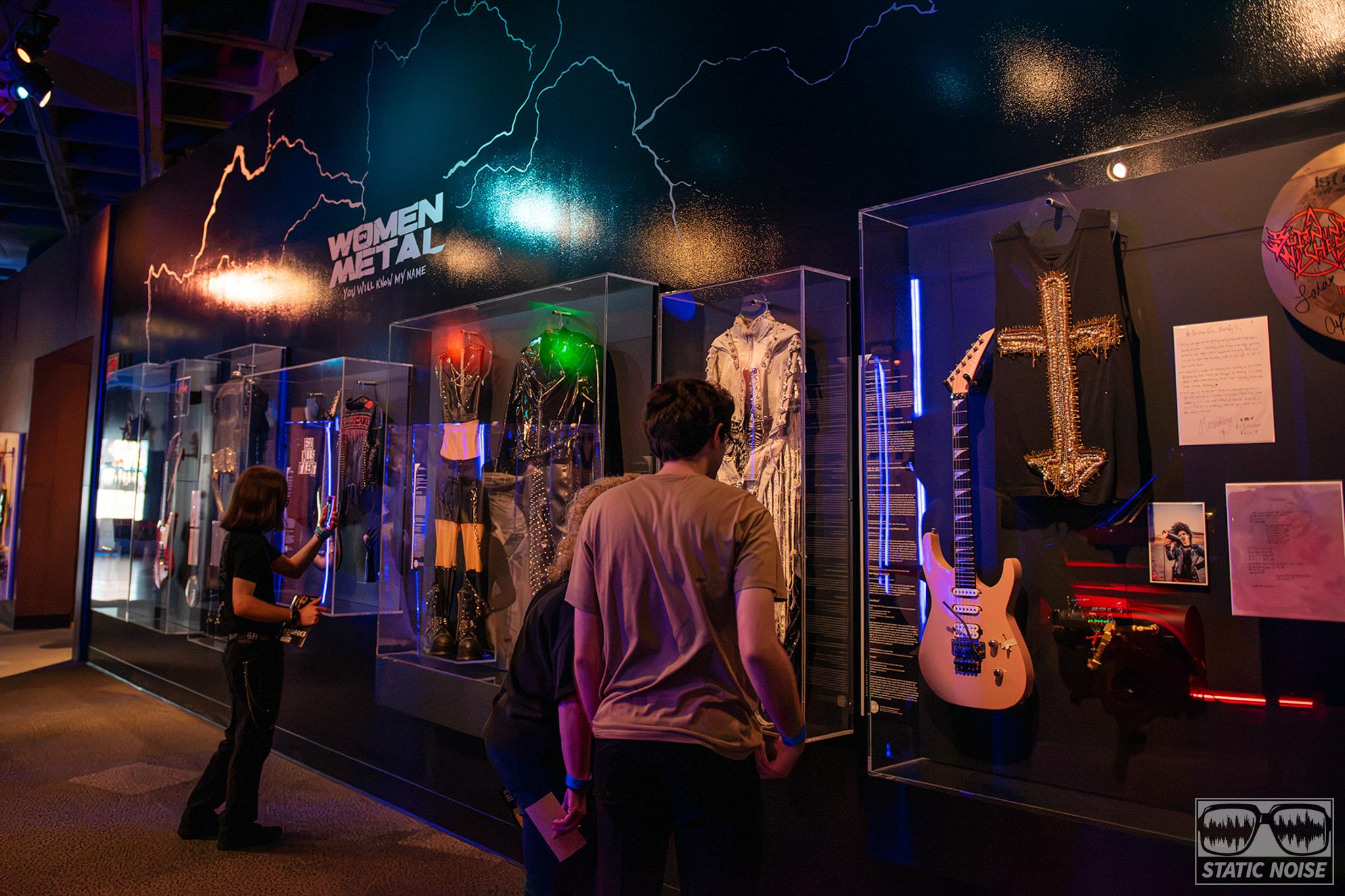
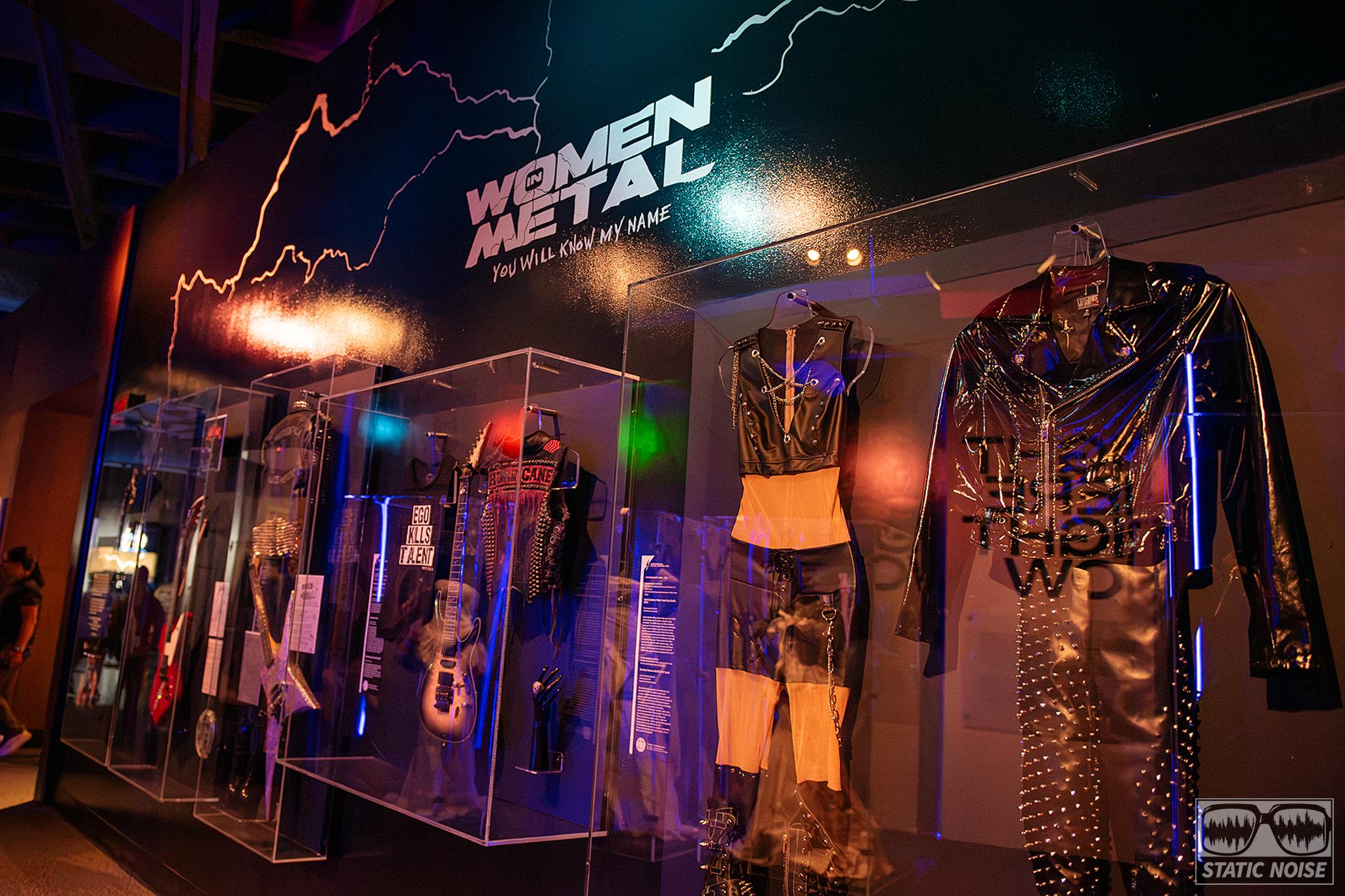
While the plaza outside came alive with music, the heart of the celebration waited just inside the museum’s walls. The exhibit is divided into three chapters that trace how women have shaped heavy music across generations: The Risktakers (1969-1995), The Changemakers (1995-2015), and The Stormbreakers (2015-Present). It tells a story of persistence, innovation, and evolution rather than simply presenting a collection of artifacts.
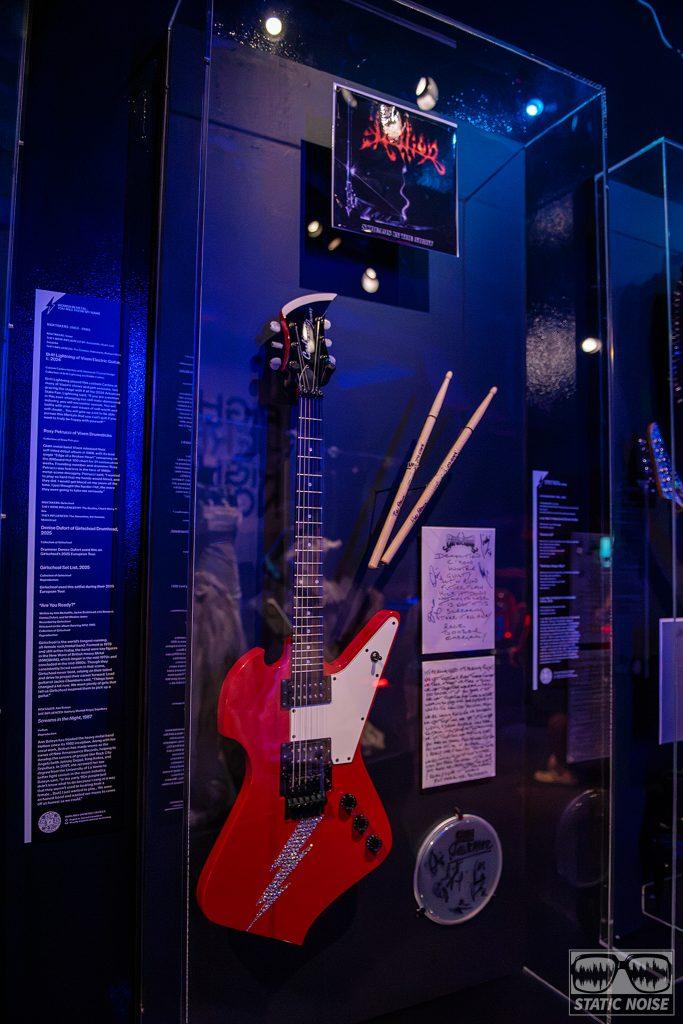
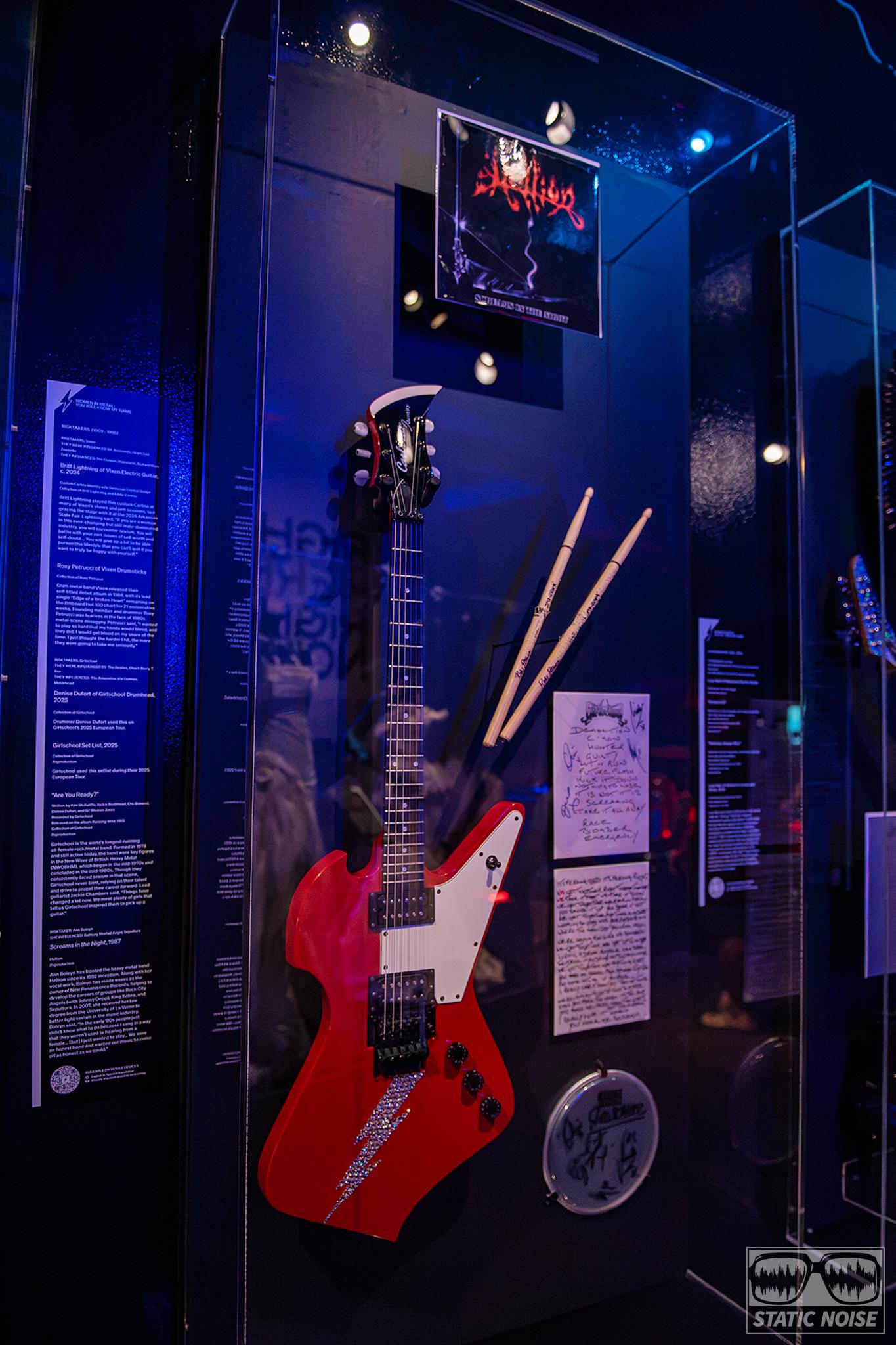
The exhibit begins with pioneers who challenged an industry that rarely welcomed women into its loudest spaces. An electric guitar from Lita Ford serves as an appropriate starting point, representing an era when simply taking the stage was an act of defiance. From there, the exhibit gradually moves through the generations, showing how each artist helped make it a little easier for the next.

What makes the exhibit especially compelling is that every artifact feels personal. One of the first pieces to catch the eye is Militia Vox’s custom flamethrowing megaphone, equal parts performance prop and artistic statement, and an immediate reminder that metal has always embraced theatrics alongside musicianship.
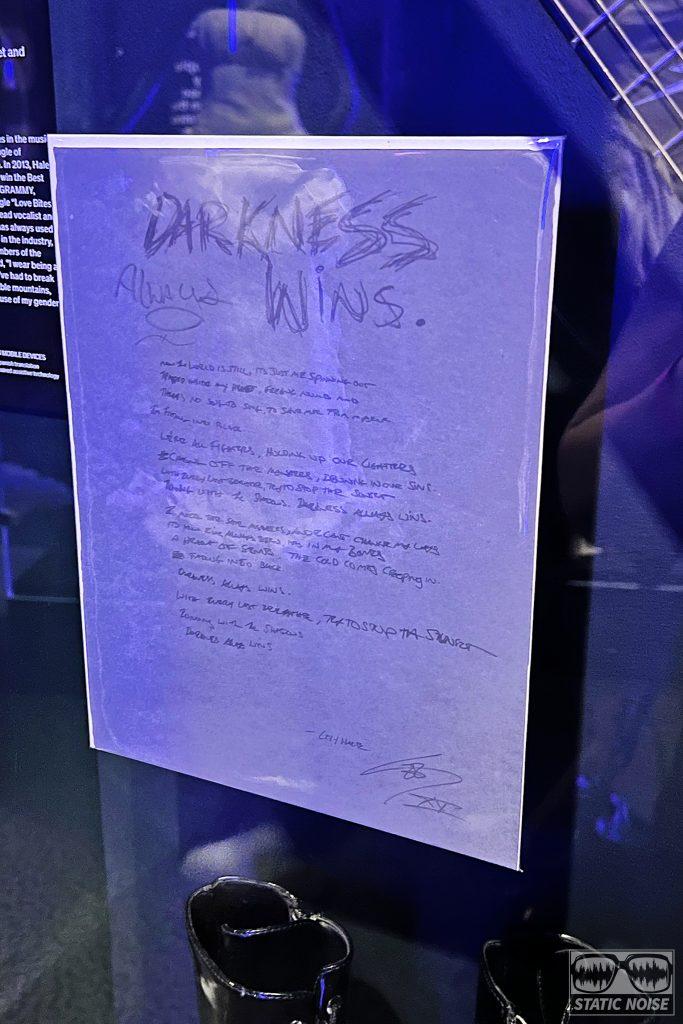
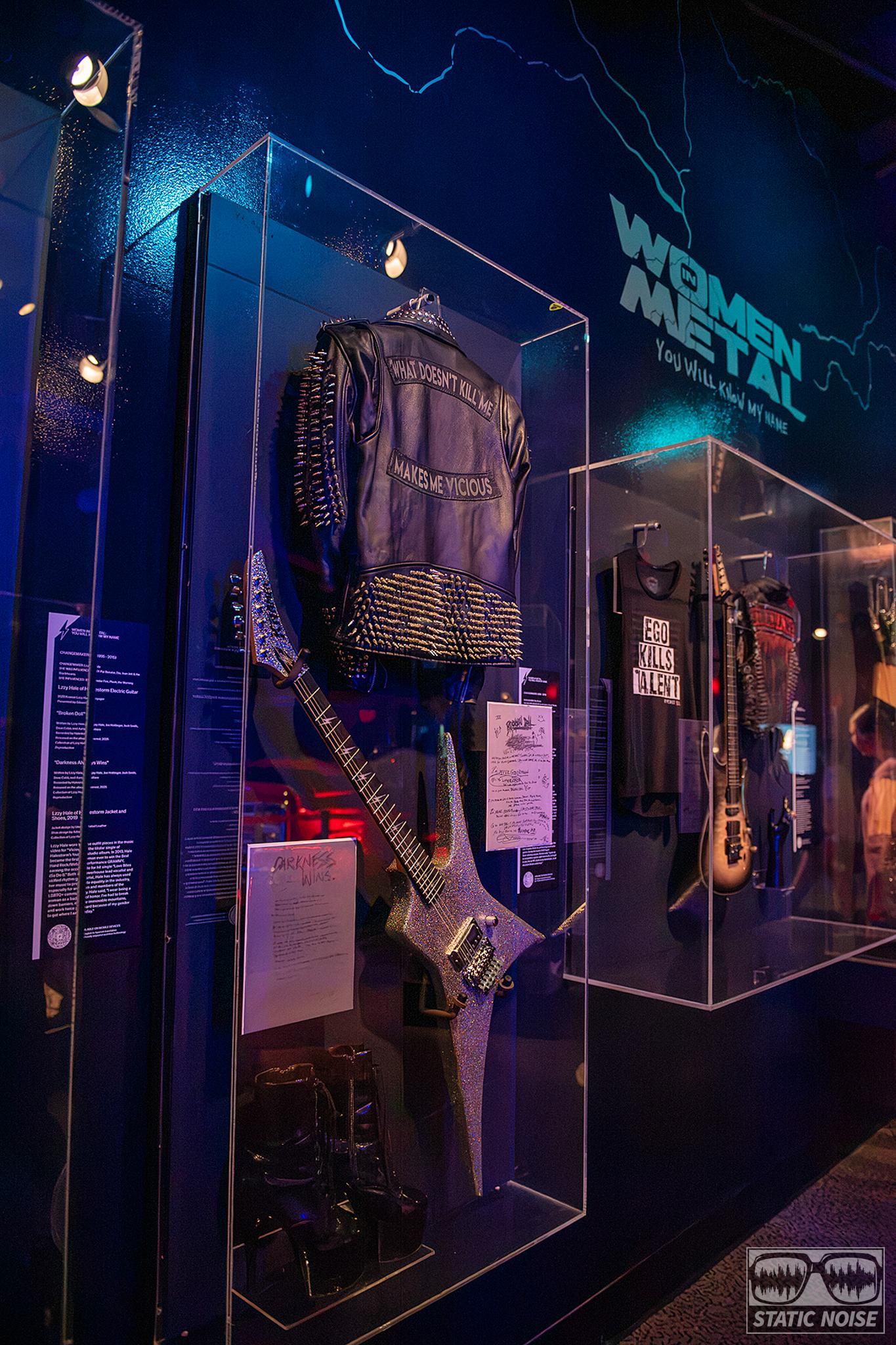
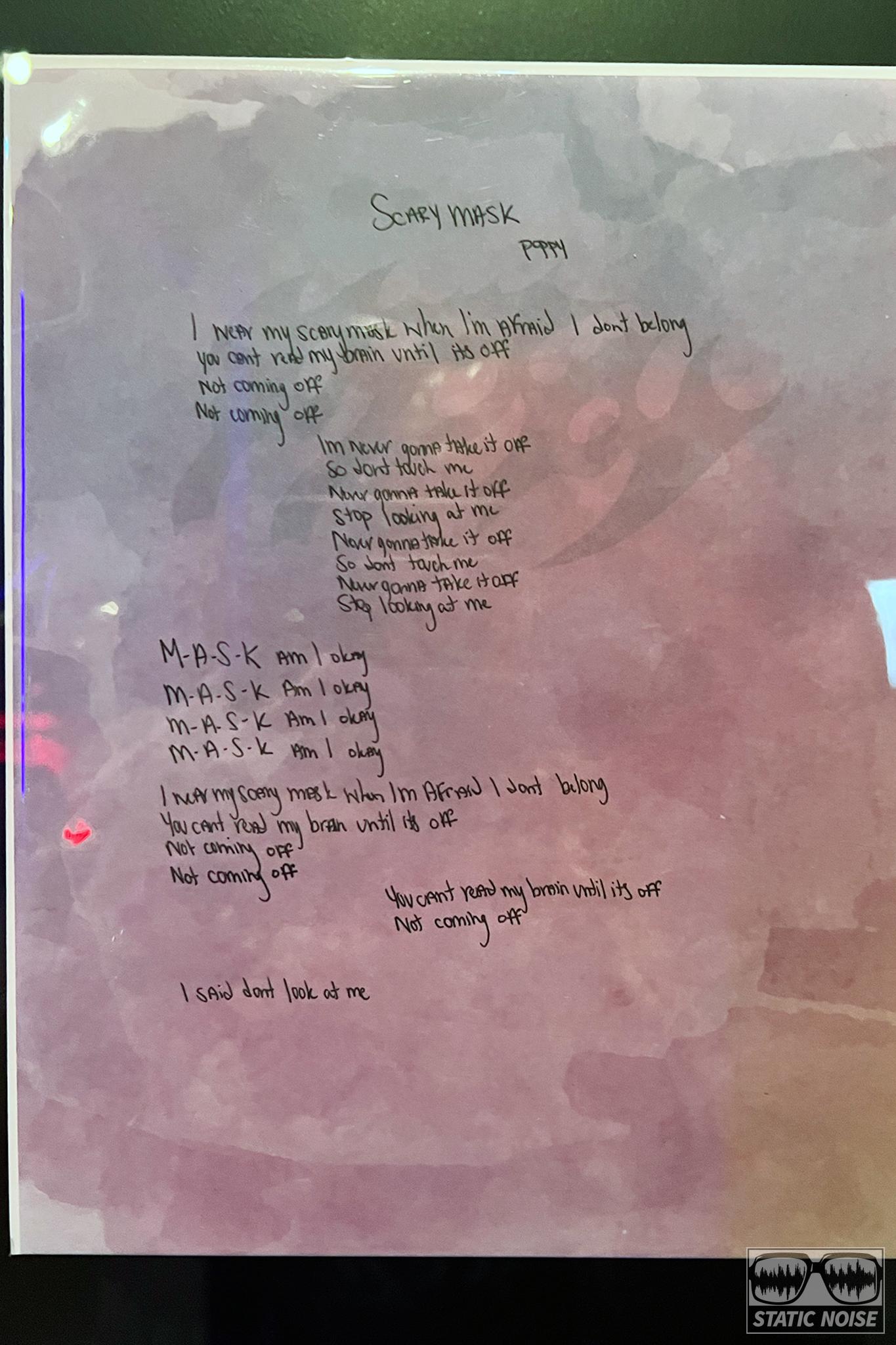
Nearby, several pieces belonging to Lzzy Hale naturally draw crowds, among them her handwritten lyric drafts for “Broken Doll” and “Darkness Always Wins,” displayed alongside similar drafts from Girlschool’s “Are You Ready?” and Poppy’s “Scary Mask.” There is something uniquely intimate about handwritten lyrics: scribbled edits, crossed-out lines, and notes in the margins reveal a songwriter long before the polished recording exists. It’s easy to understand why Cronin described handwritten lyrics as some of her favorite artifacts to display: they preserve a moment when an idea was still taking shape.

Just a few steps away stands another standout piece: the black leather jacket Hale wore in Halestorm’s “Vicious” music video. Covered with spikes along the sleeves and hem, with “What Doesn’t Kill Me Makes Me Vicious” emblazoned across the back, the jacket is hard to miss. Fans will instantly recognize it, but even visitors unfamiliar with Halestorm can appreciate what it represents: more than stage clothing, a visual embodiment of resilience and refusing to be diminished.
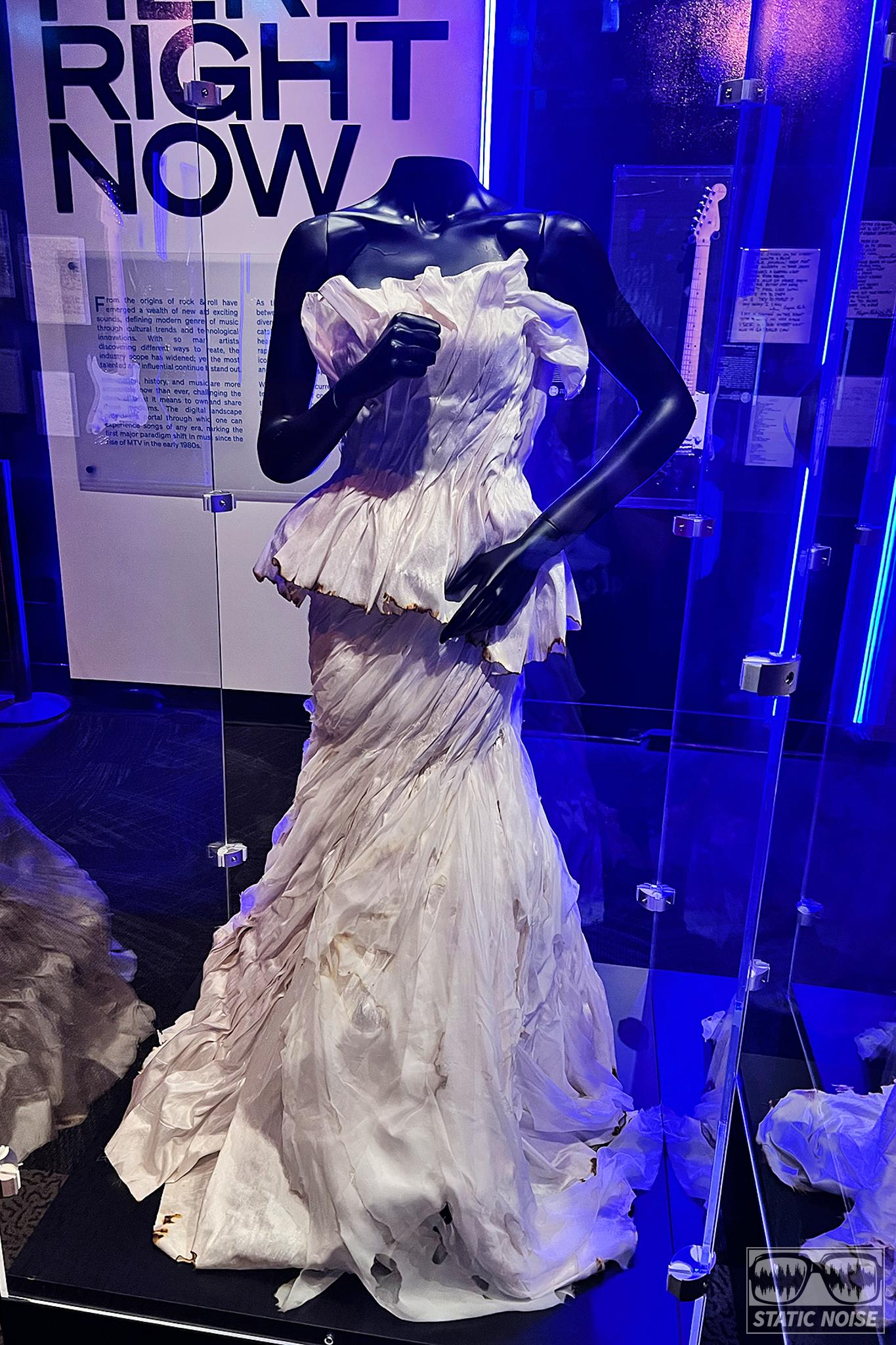
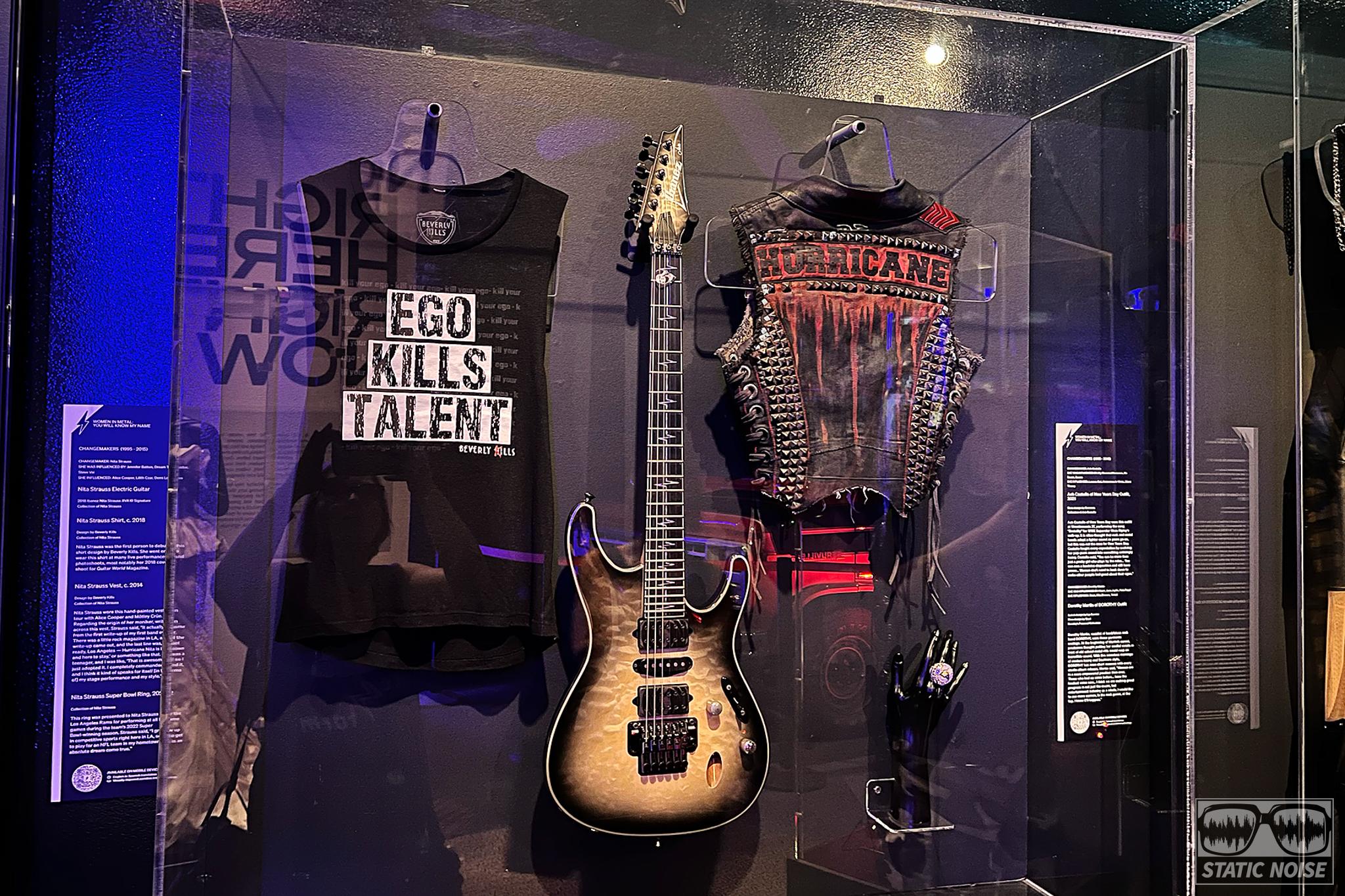
The exhibit continues with artifacts that capture the diversity of today’s women in metal. Nita Strauss’ electric guitar sits alongside the custom vest designed by Beverly Kills, featuring the word “Hurricane” stretched proudly across the back, a reflection of the unmistakable identity Strauss has built throughout her career. Across from her display, the aesthetic shifts dramatically with a striking display of flowing white gowns worn by The Warning. Torn, layered, and seemingly singed, the dresses demonstrate that there is no single visual language for metal; strength can be elegantl, aggressive, or understated while remaining undeniably powerful.


Together, the artifacts tell stories that go far beyond platinum records or sold-out arenas. They capture creativity, vulnerability, and the individuality each artist brings to the genre.
Three Bands, One Powerful Statement
With Hale and Hottinger’s set behind them, three rising bands took the stage and demonstrated exactly why they’d earned their place on the opening-night lineup.
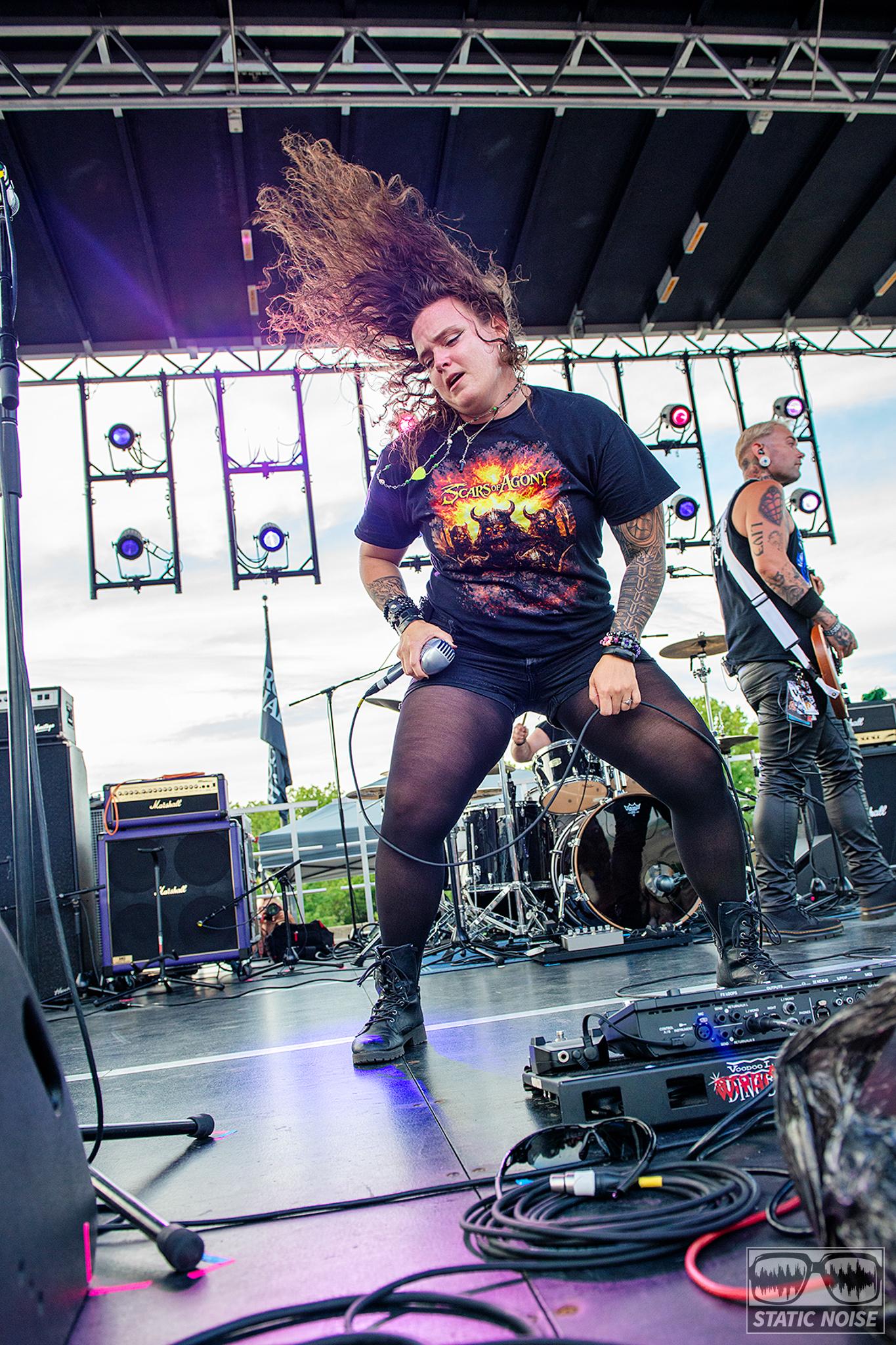
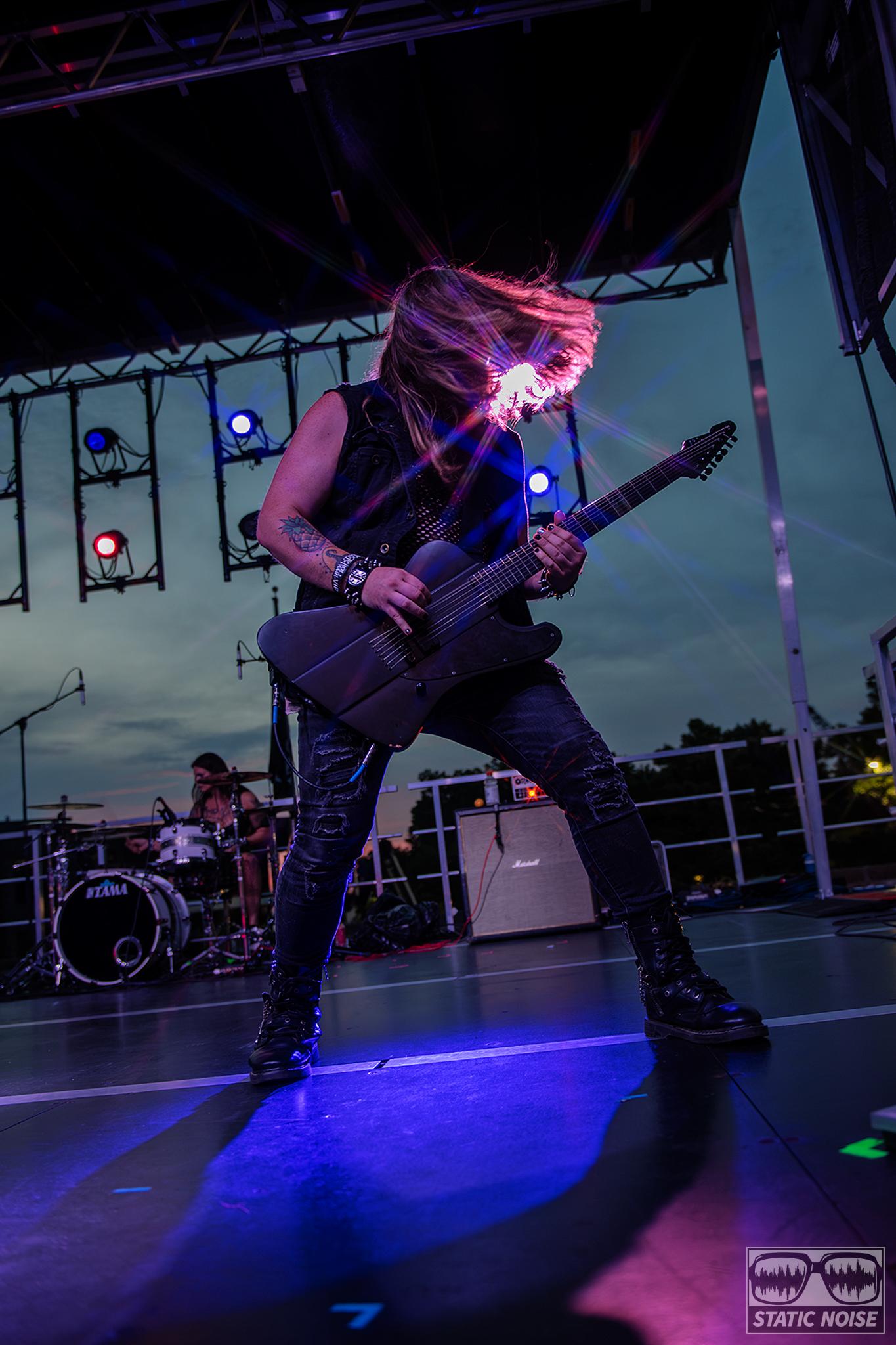
Storms Within wasted no time making an impression. Their performance carried the energy of a much larger venue, driven by a frontwoman (Erica Mayr) whose commanding stage presence immediately captured the audience’s attention. As she whipped her long hair through the air and headbanged across the stage, it felt less like a museum event and more like standing in the crowd at a full-scale arena metal show. The band played with the conviction of artists determined to leave a lasting impression.
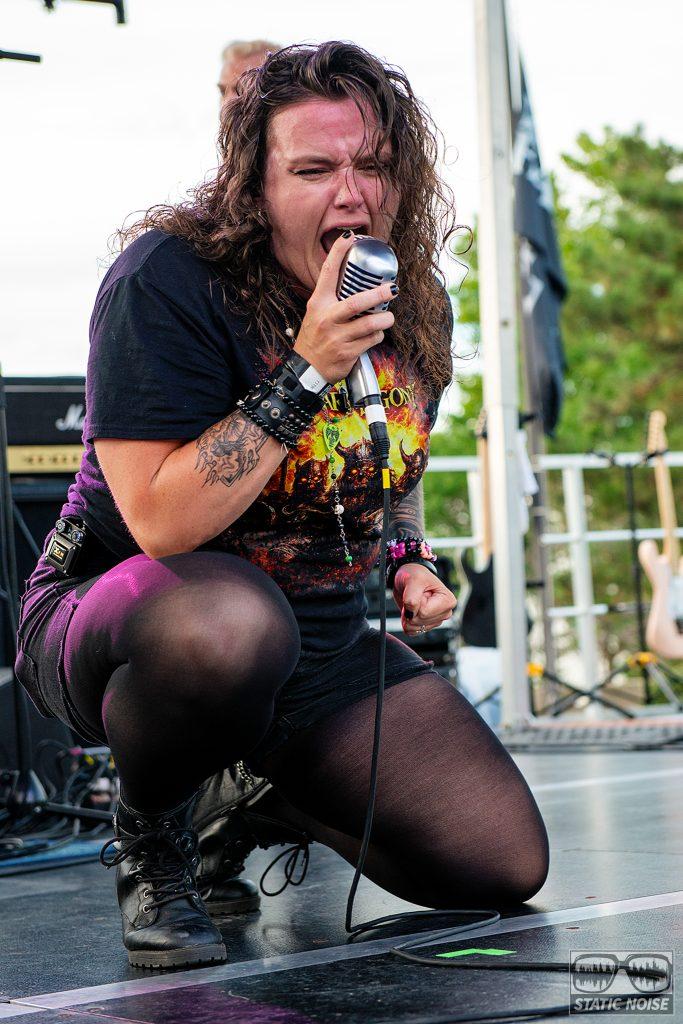
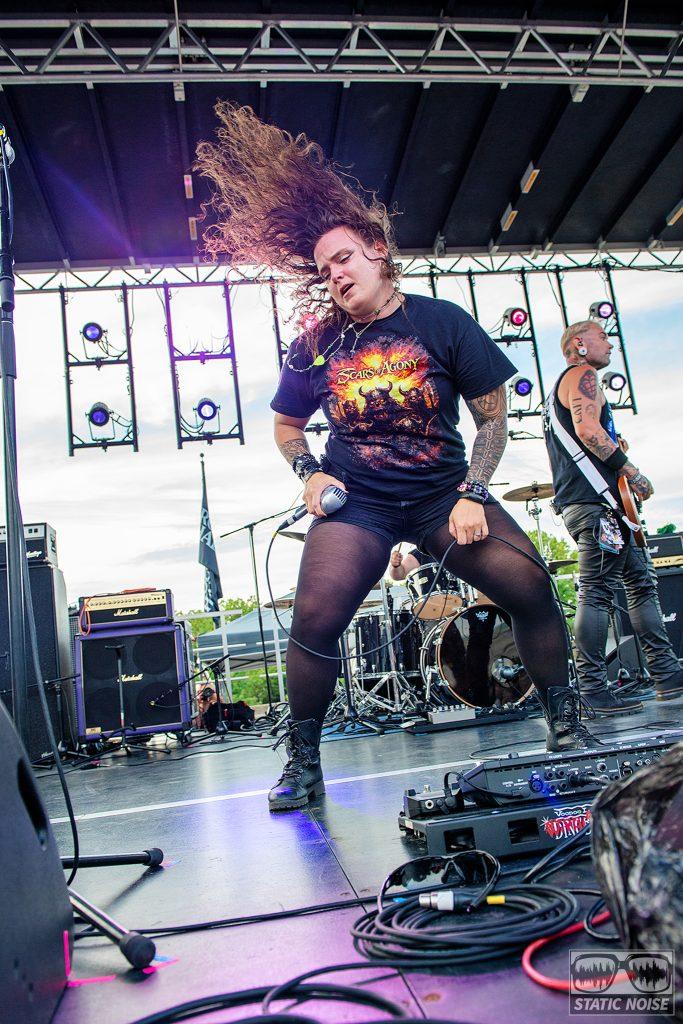
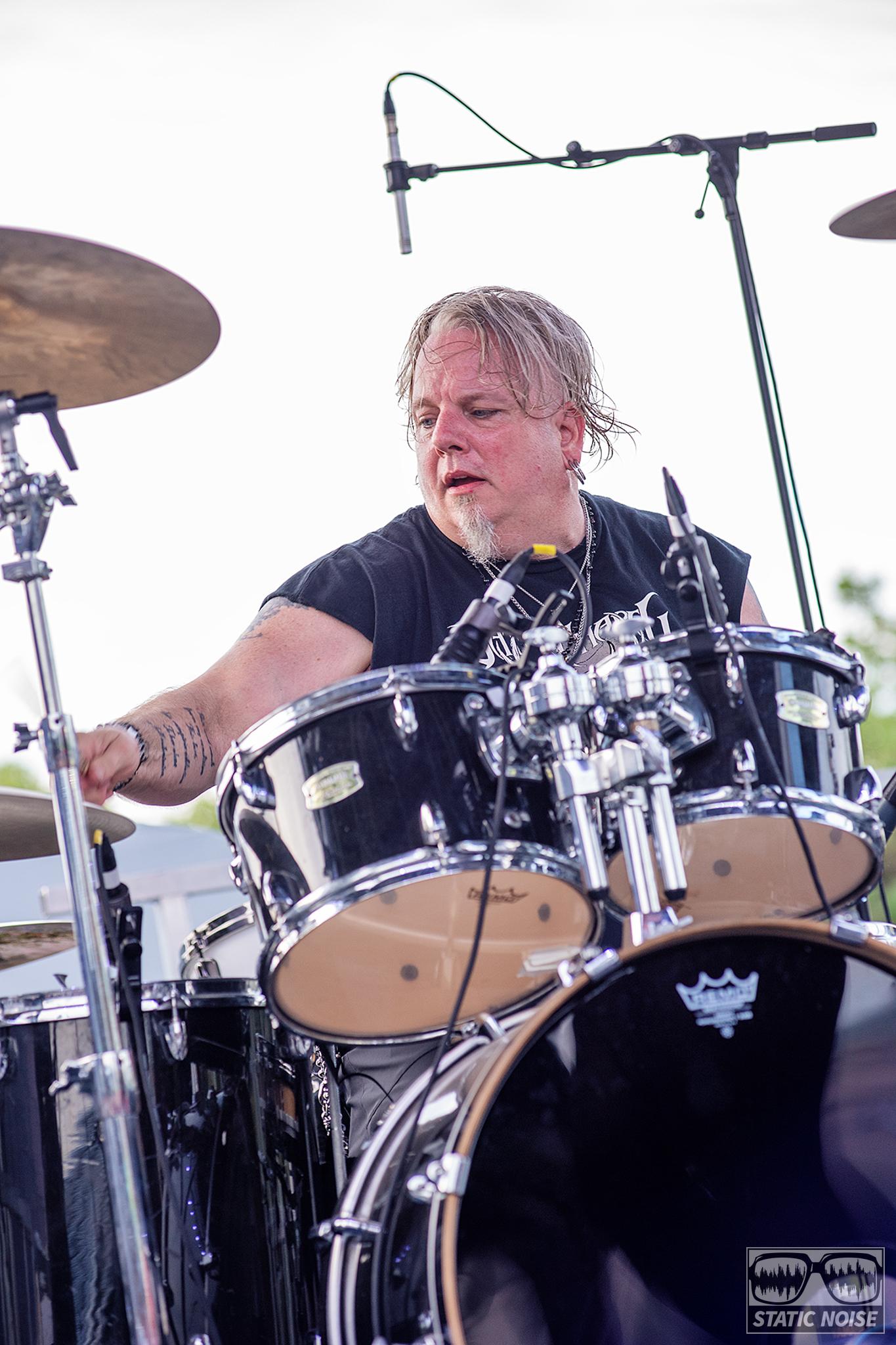
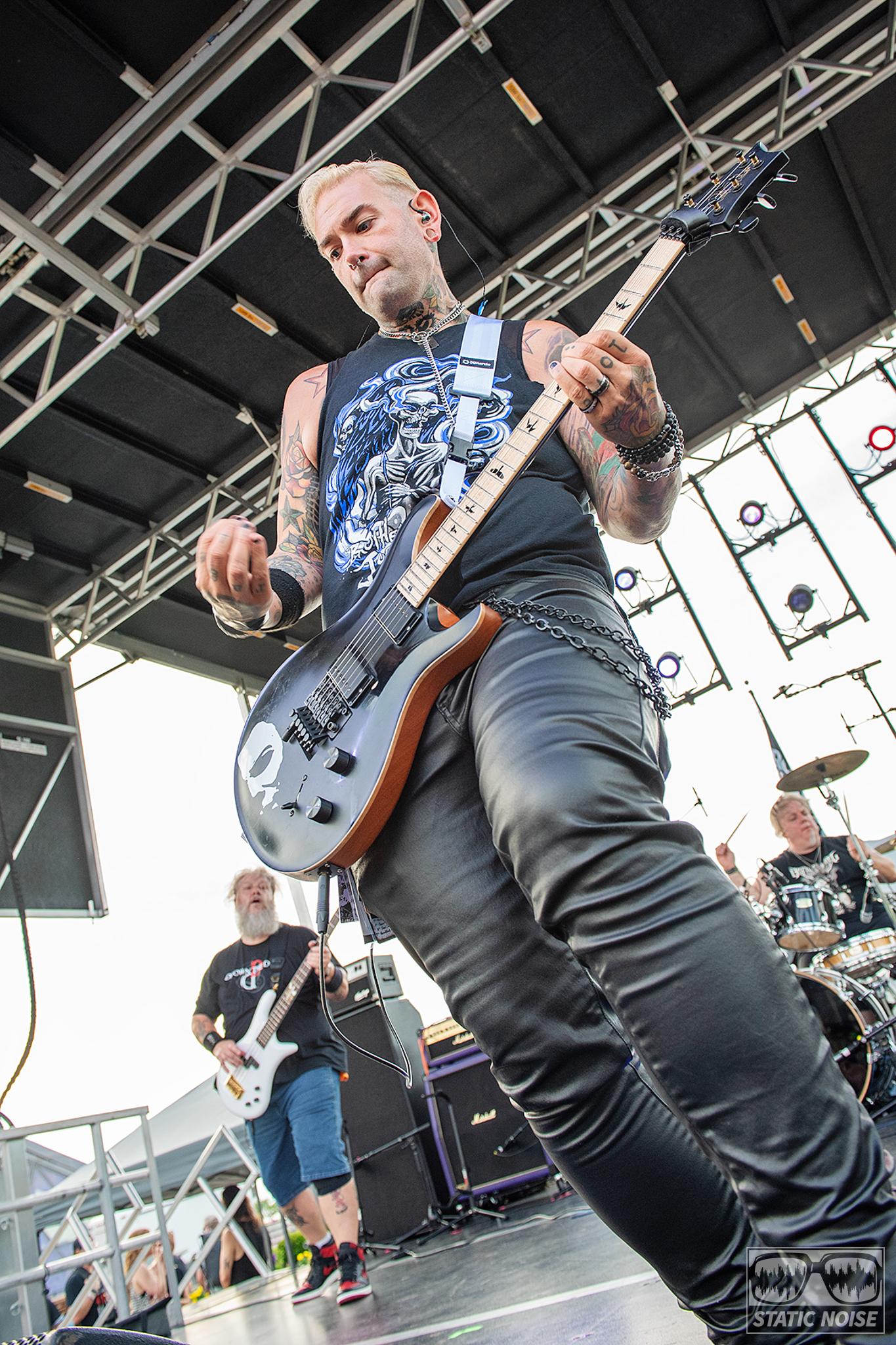
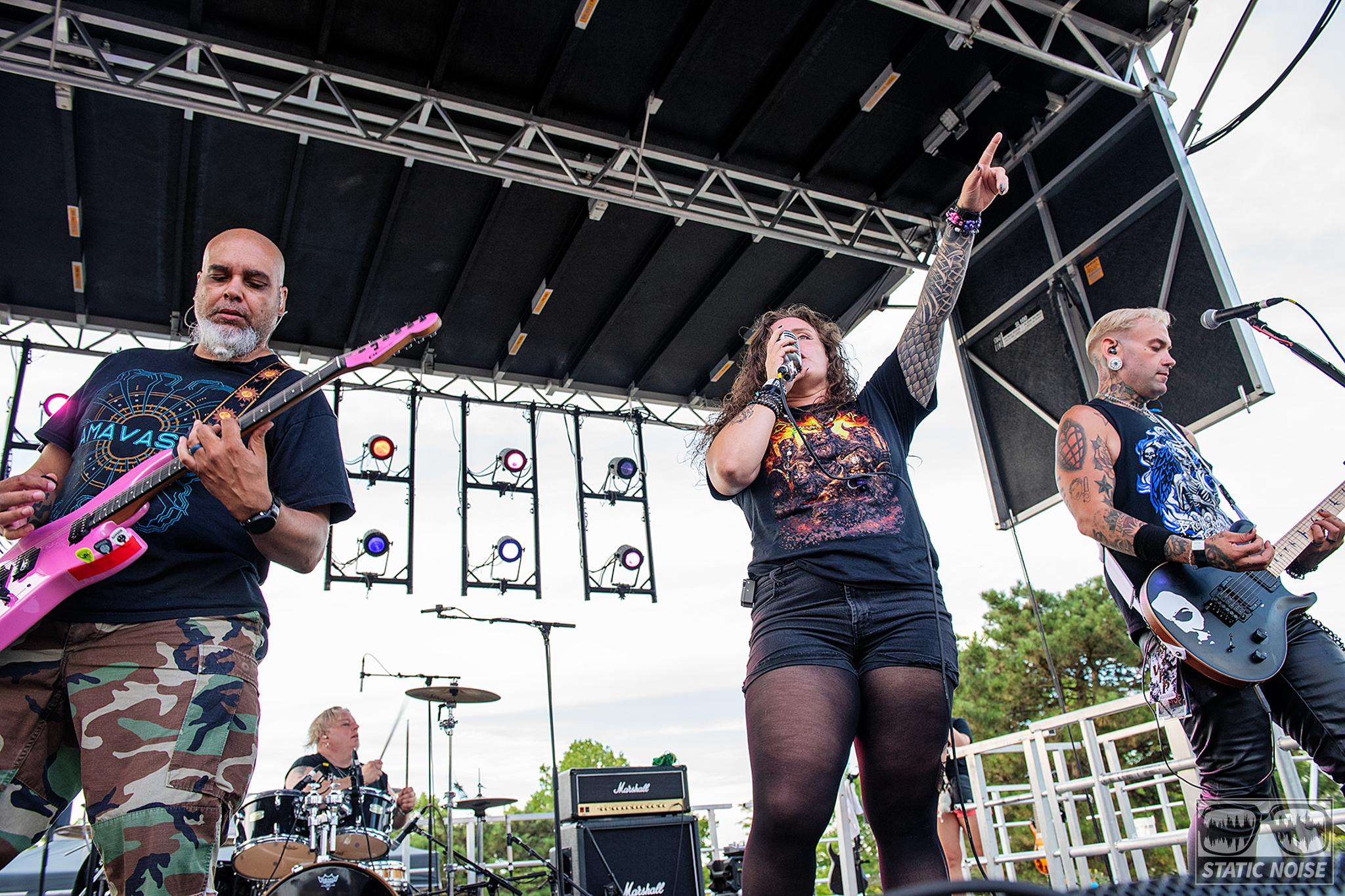
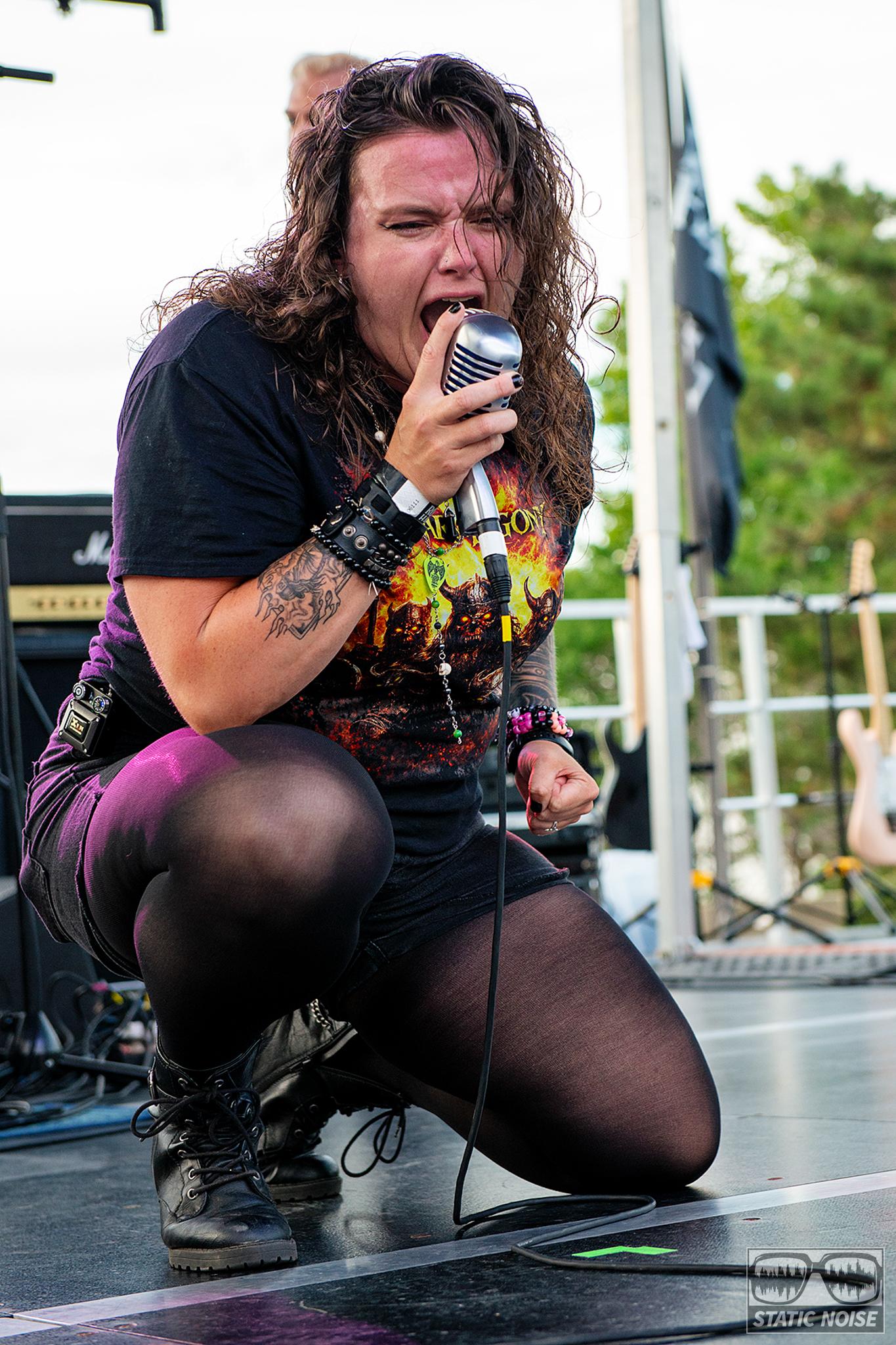
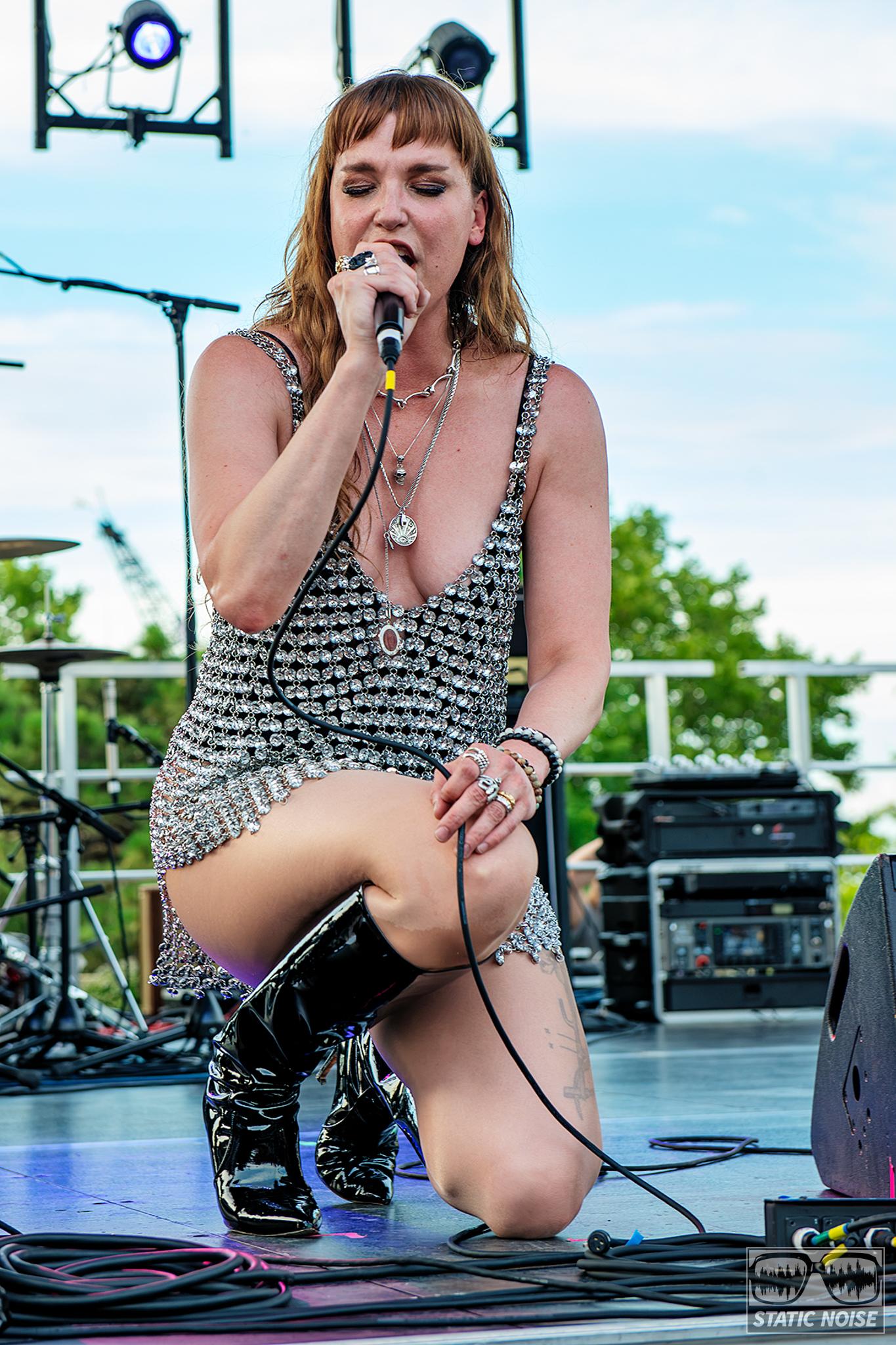
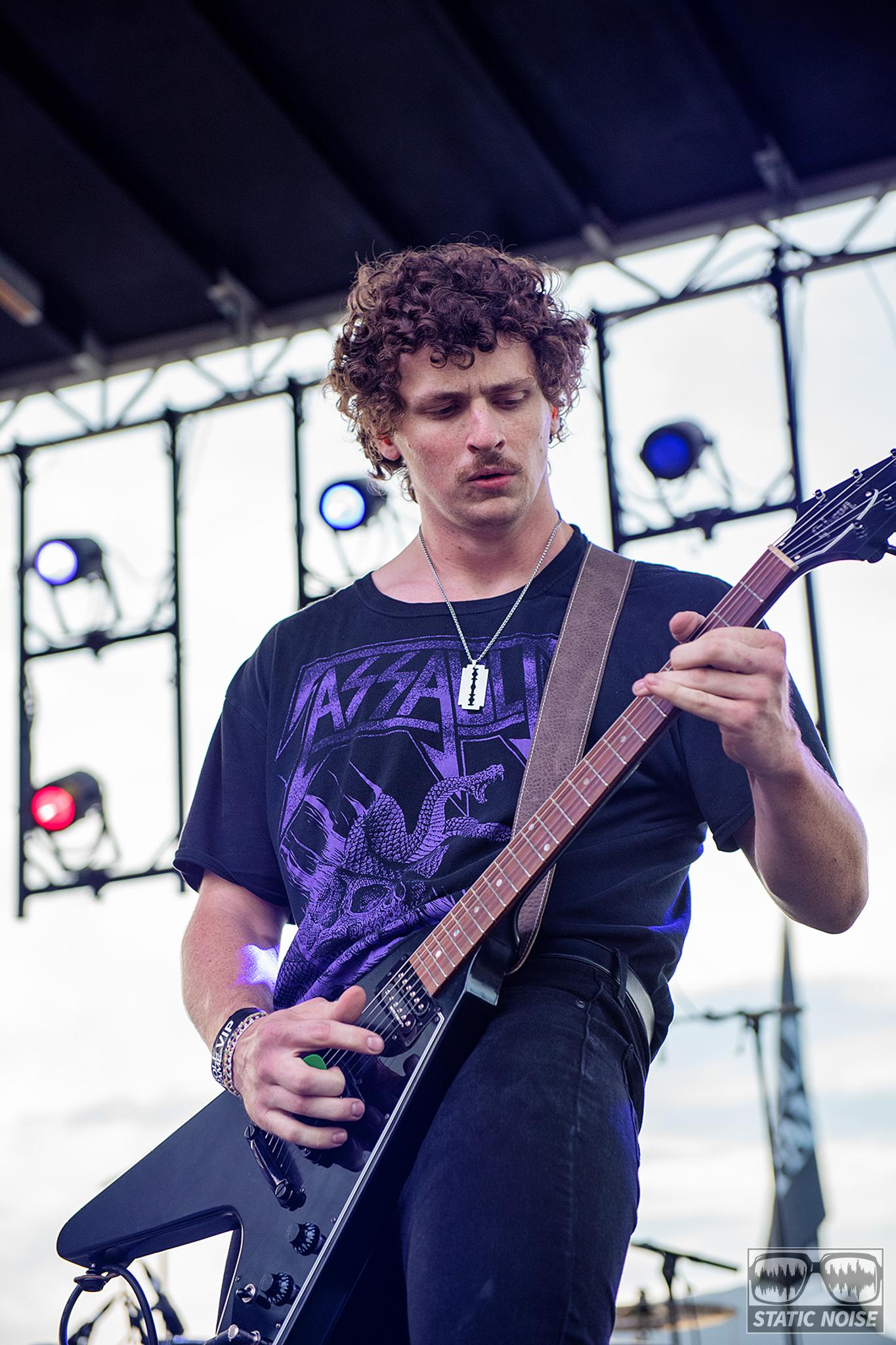
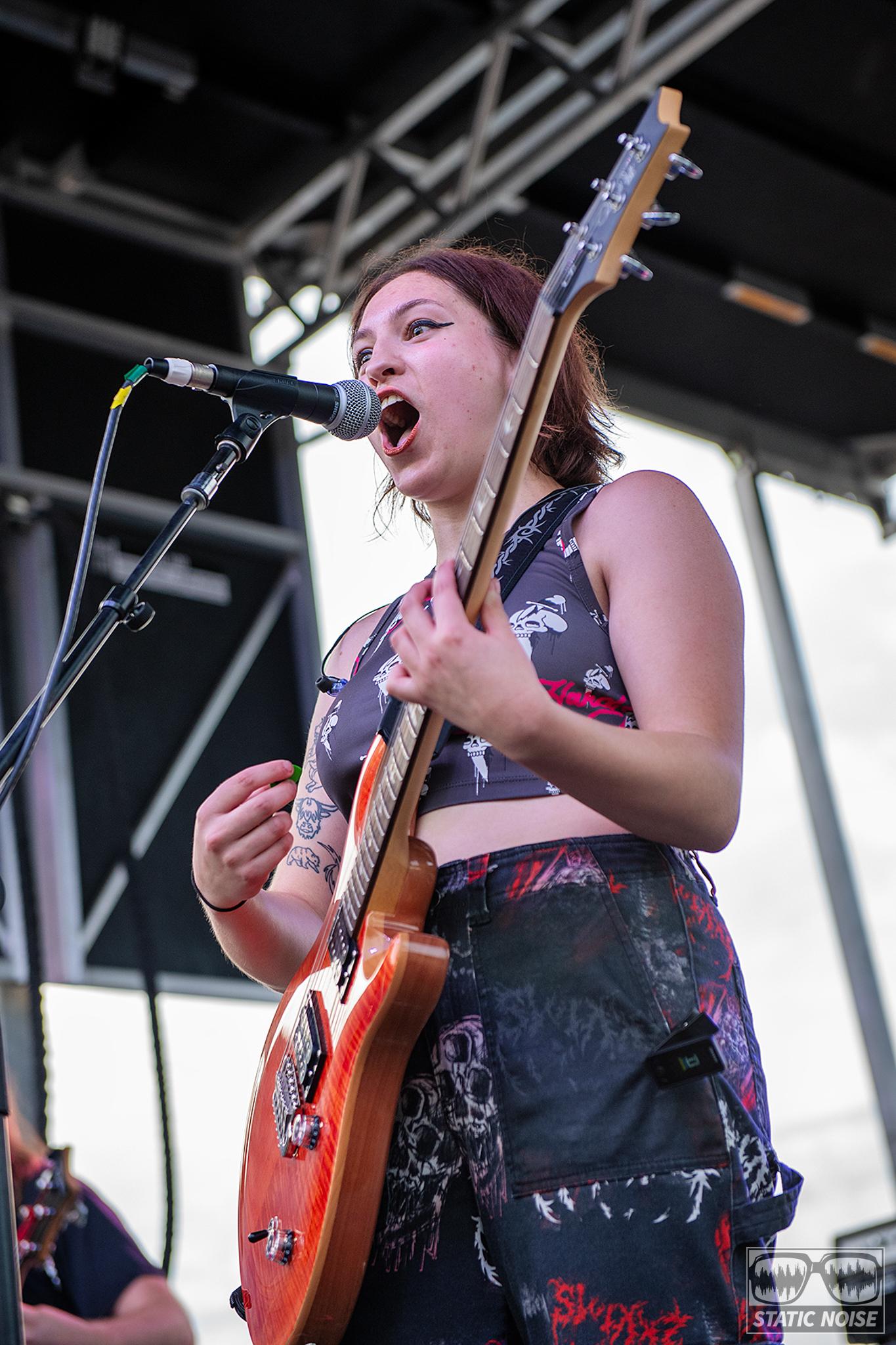
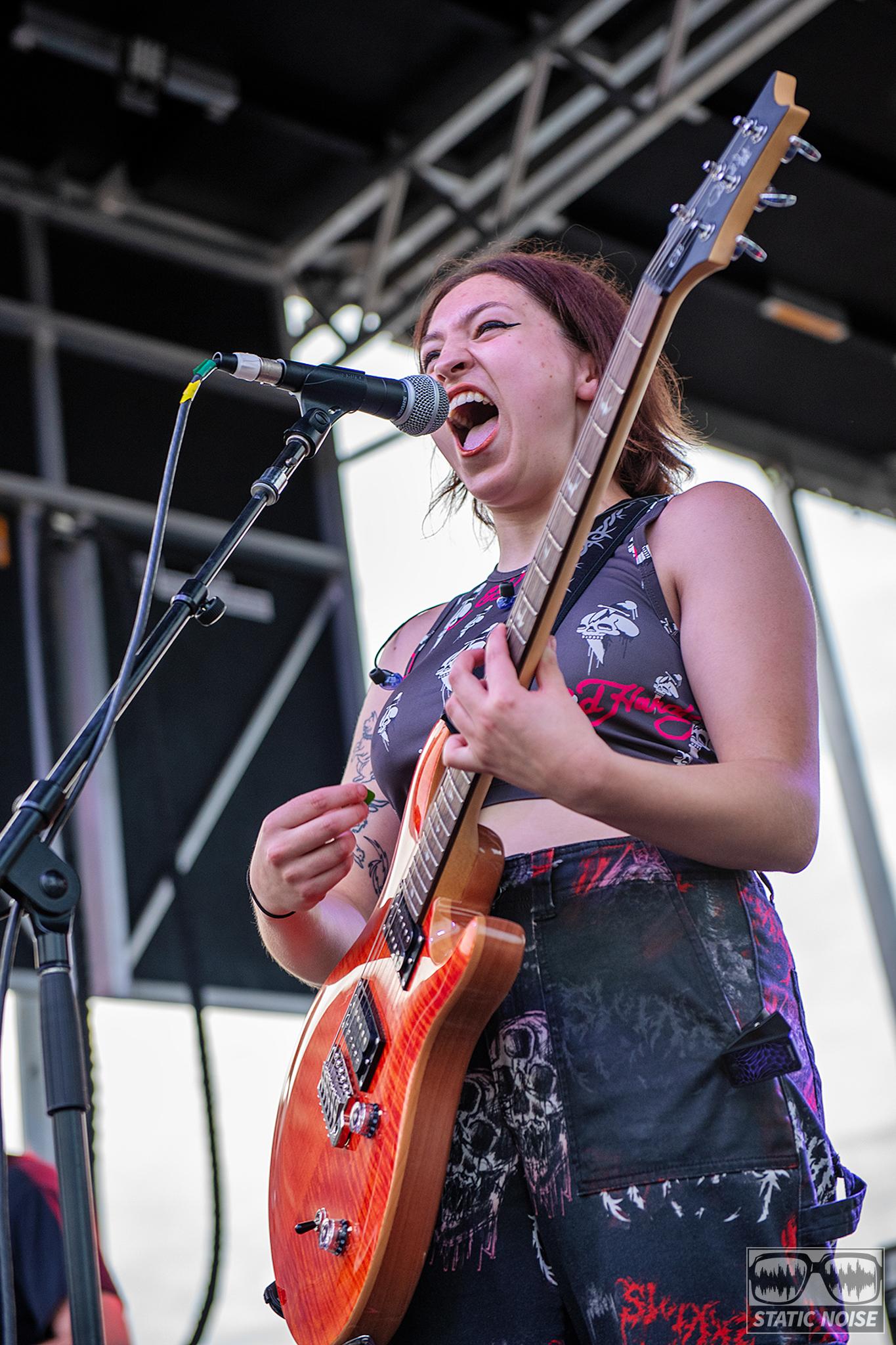
MAXILLA brought a different kind of intensity. Knowing Cronin as this exhibit’s curator added another dimension to the set: the same woman responsible for nearly two years of research and artifact selection now stood center stage as the performer behind the name MAXILLA. You couldn’t take your eyes off her, constantly scanning the crowd and locking eyes with fans throughout the performance. At one point, she knelt directly in front of our webmistress/photographer Renee’s camera and stared straight into the lens with an intensity that perfectly reflected the band’s sound. It became my favorite photograph of the evening.


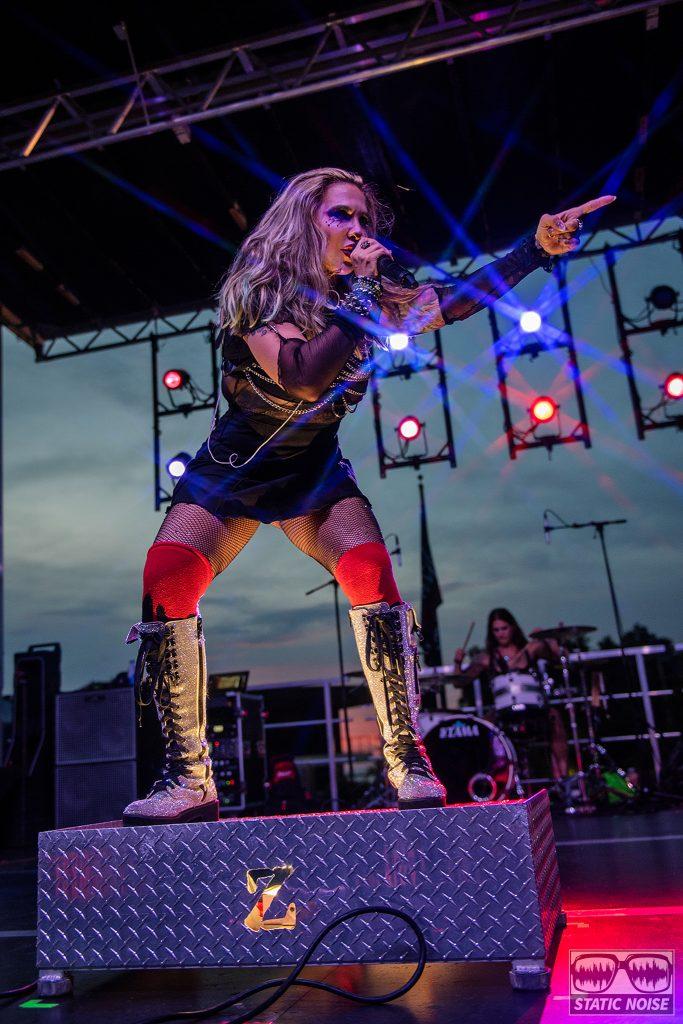
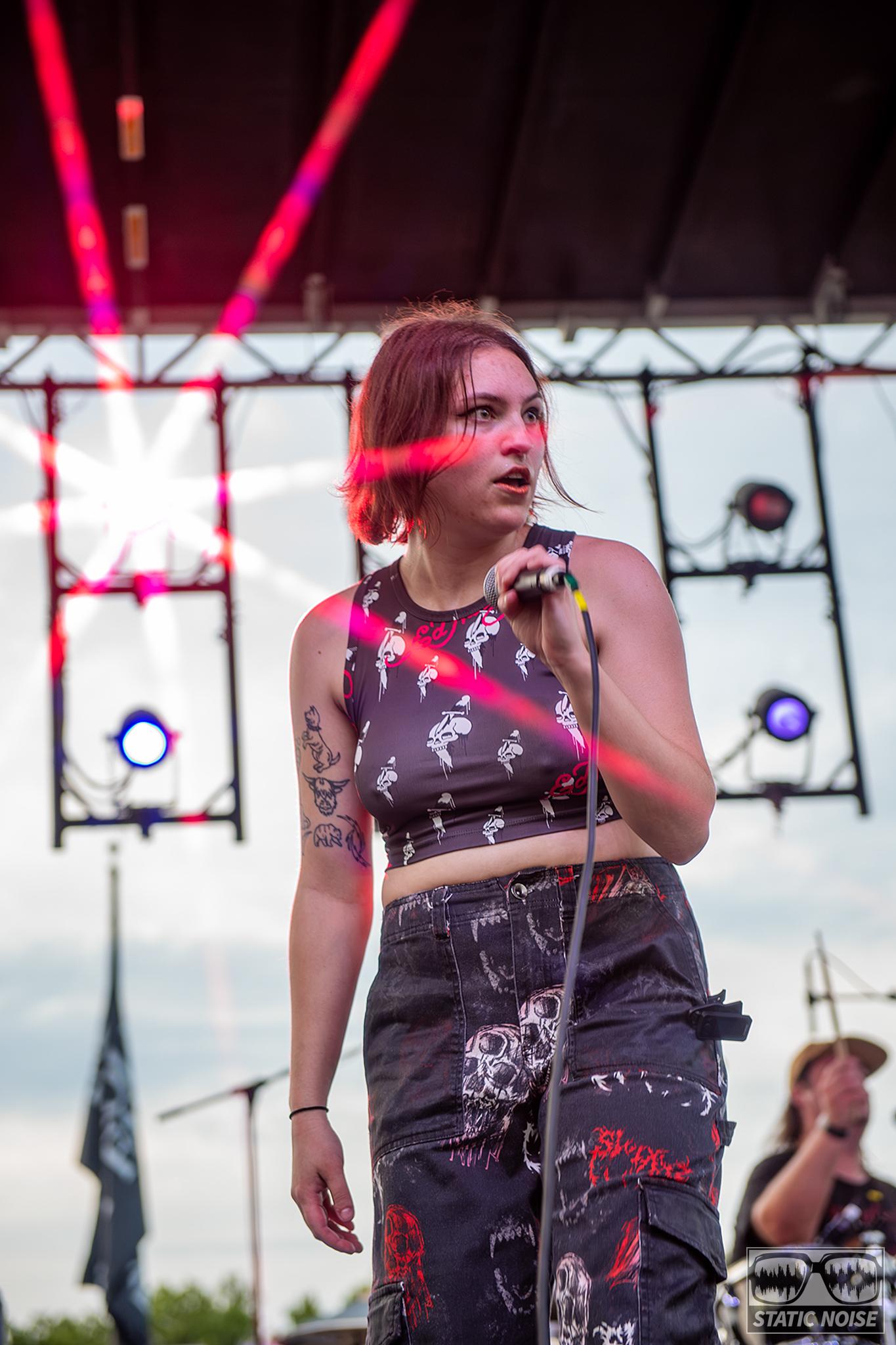
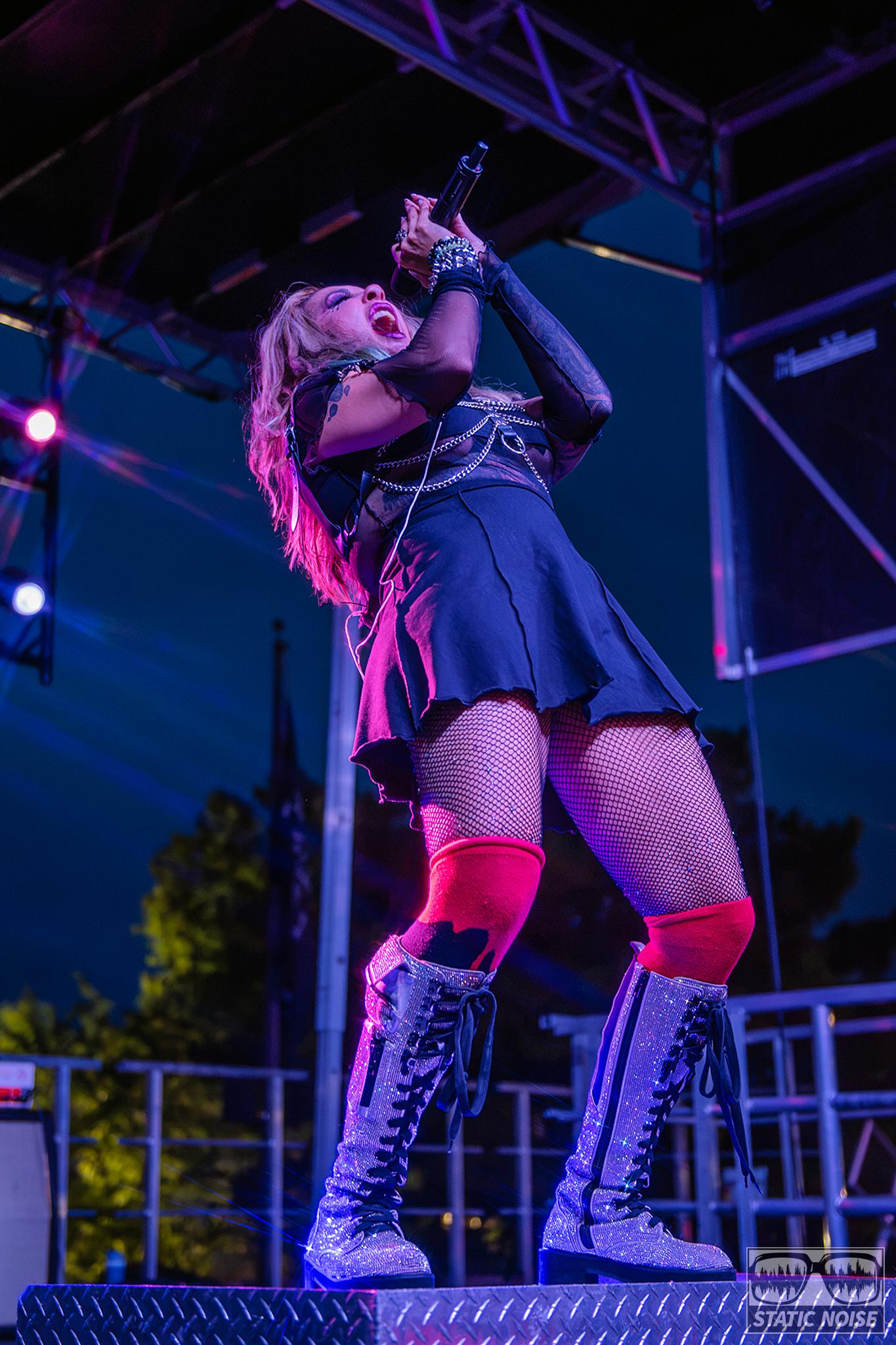
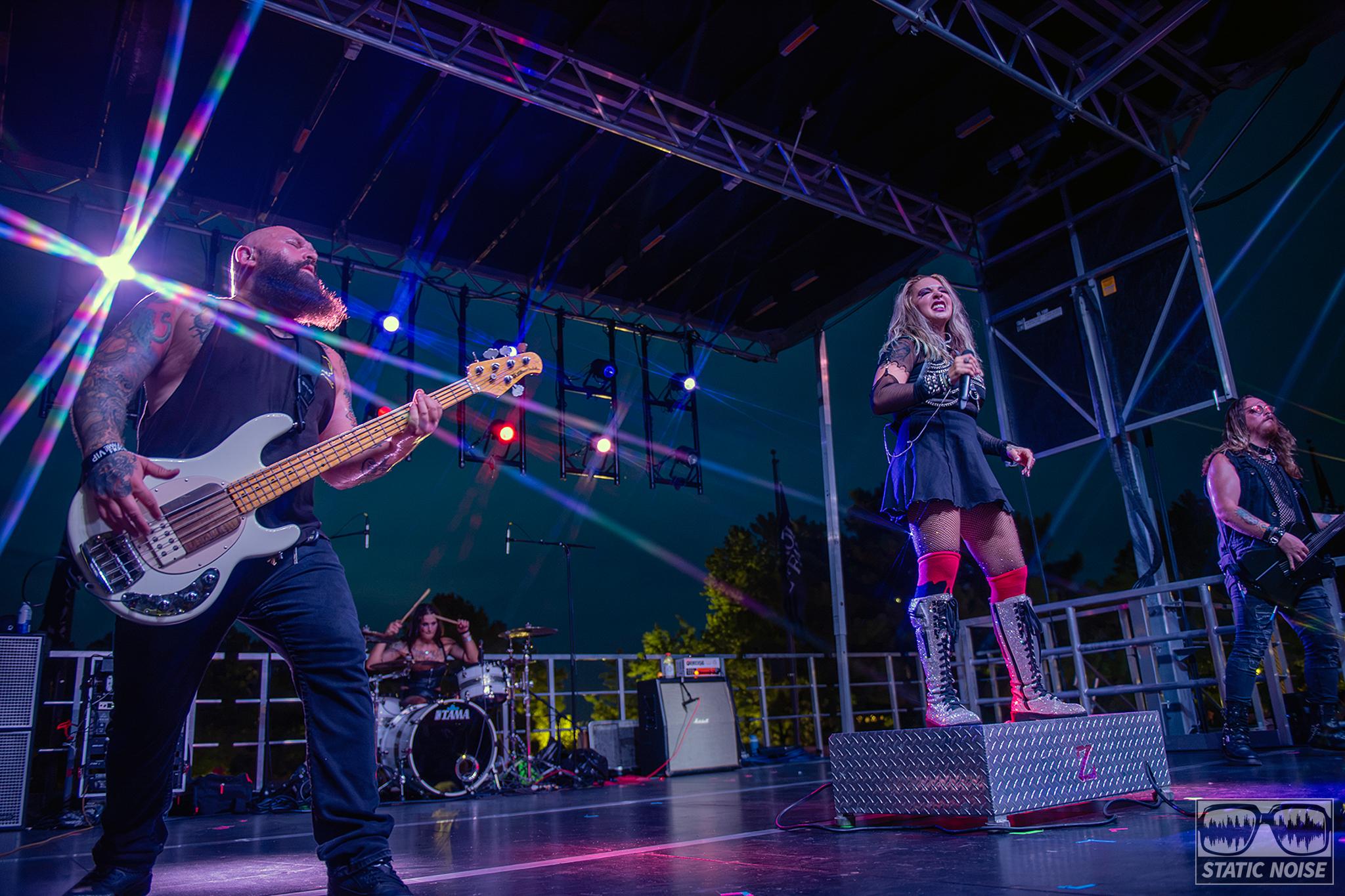
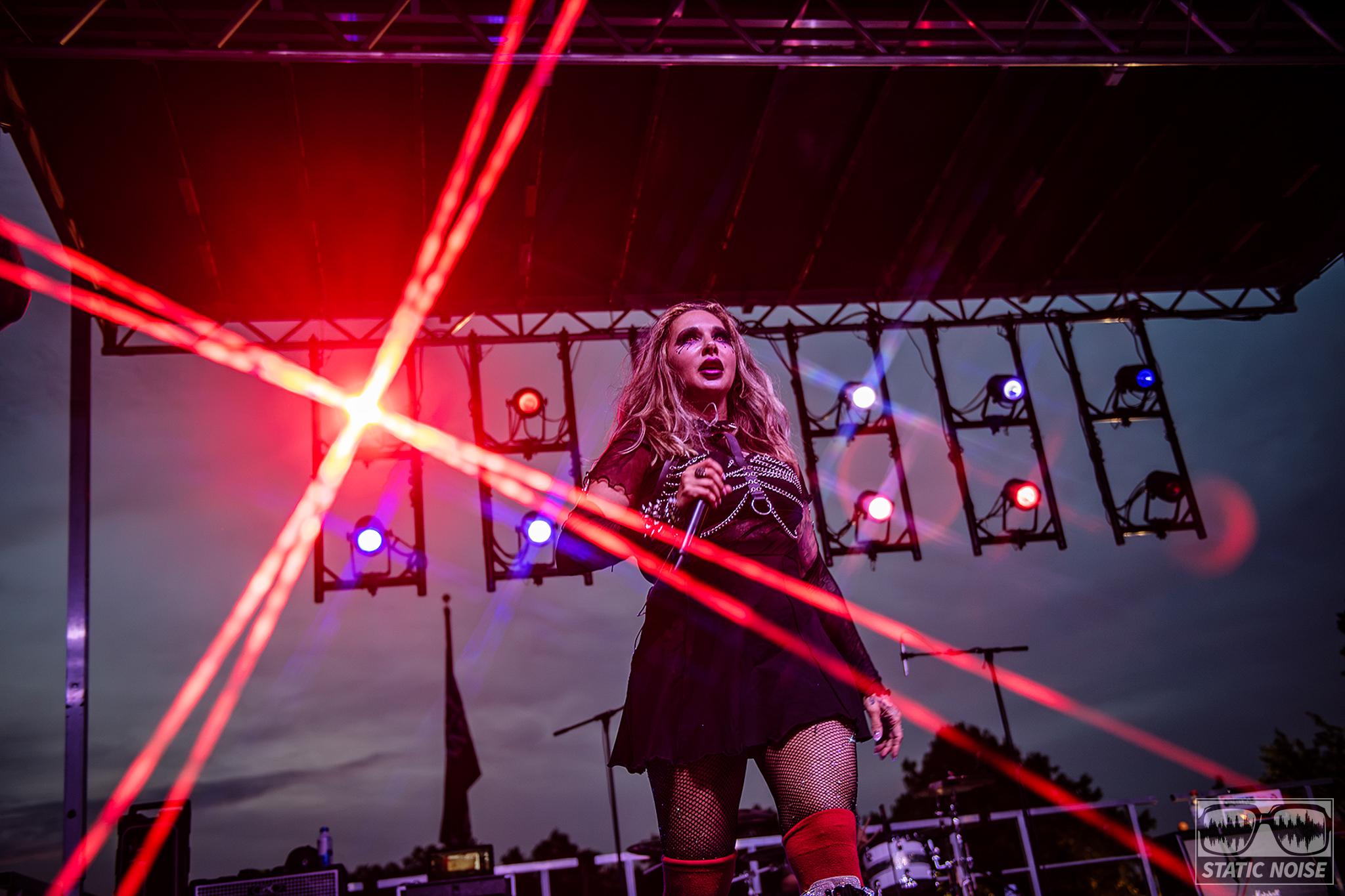
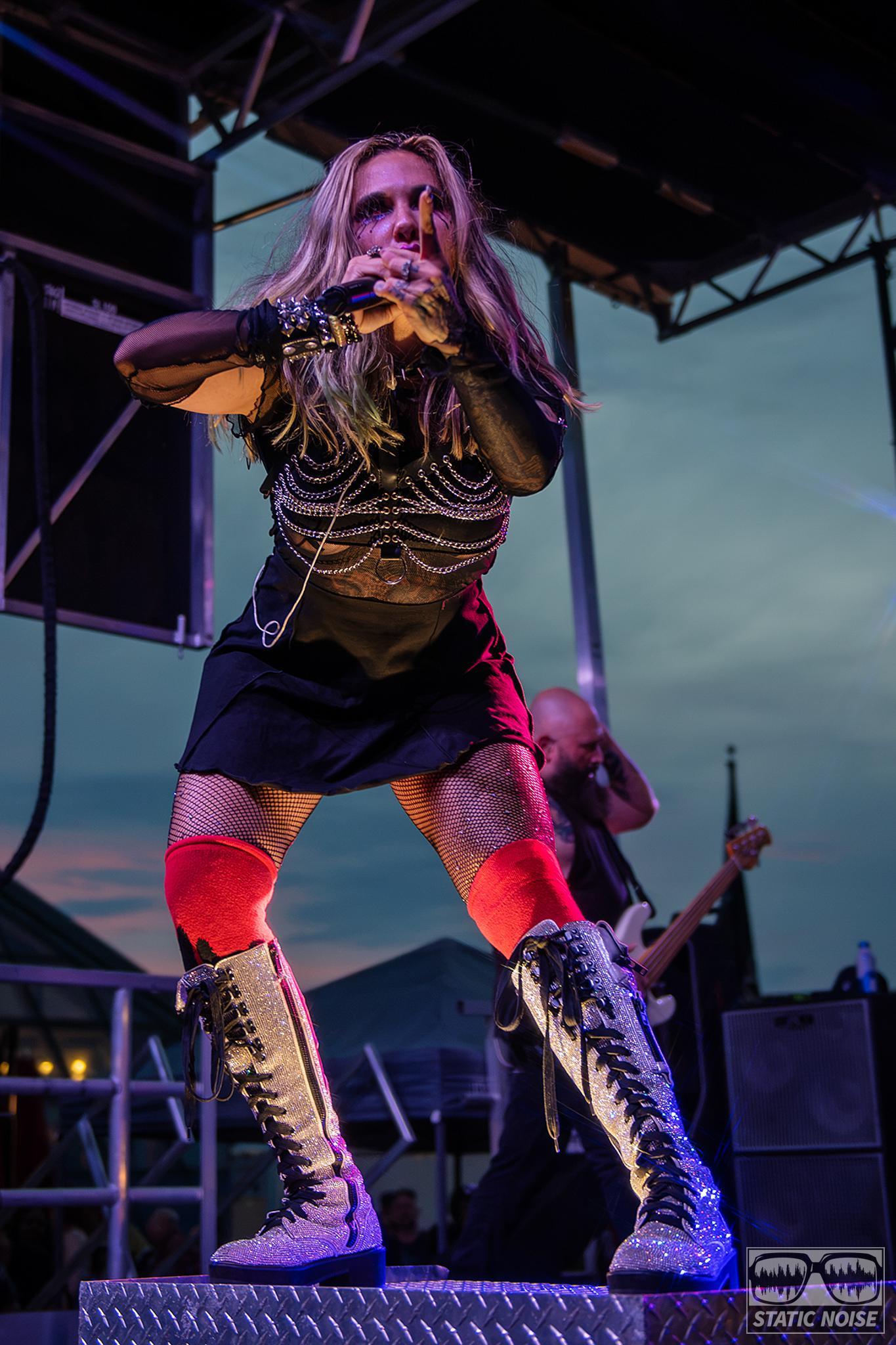
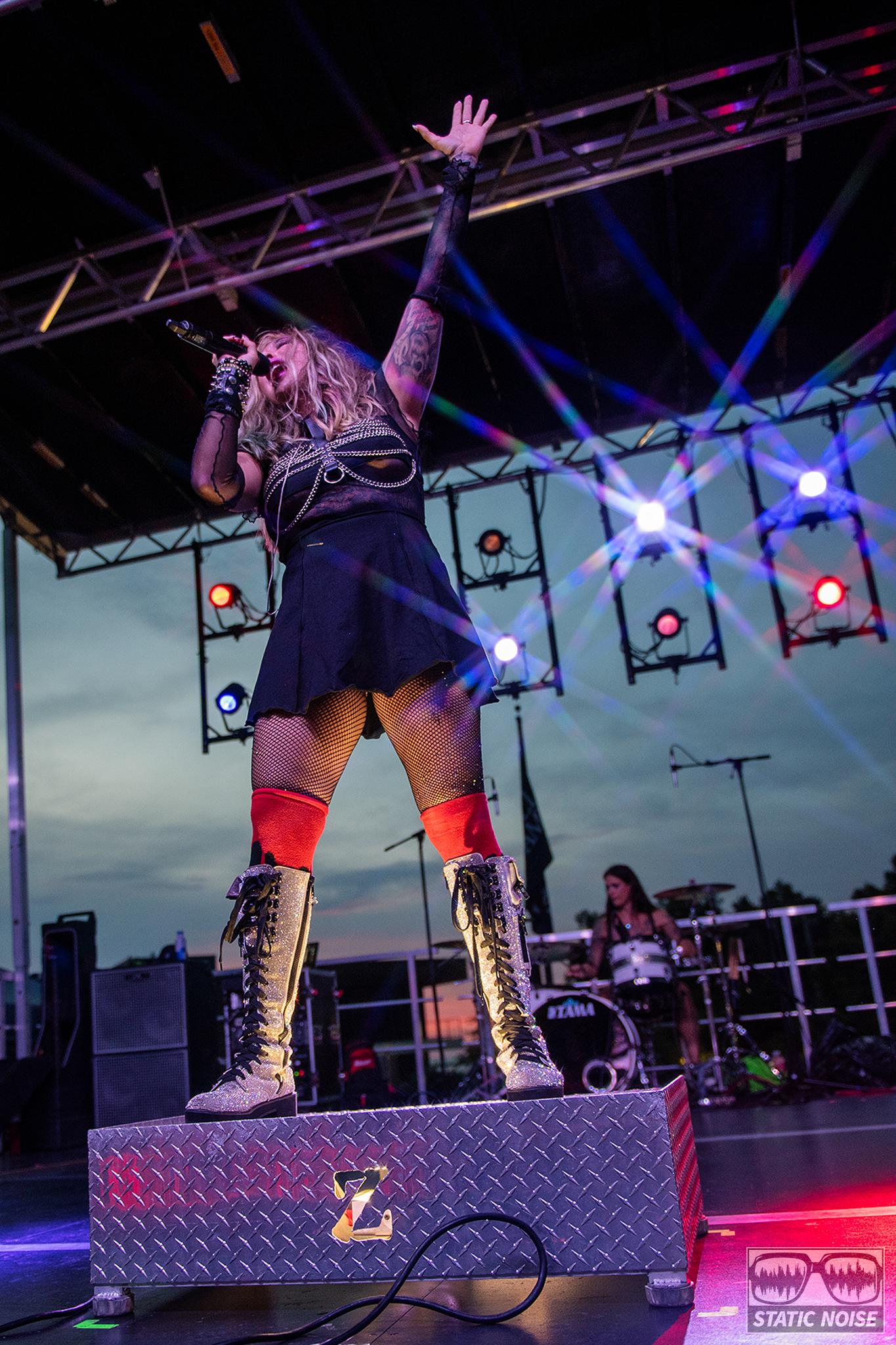
Closing out the supporting lineup, Reign of Z opened with a siren blaring over the PA, all sparkly boots and stockings offset by full-throttle metal. Frontwoman Corinne “Reign” Crisman, who leads the Pittsburgh-based band, sang soaring melodic vocals that occasionally evoked memories of Amy Lee, most notably on their second song that they performed, “Cellophane,” before shifting into screams that reminded everyone exactly what kind of show they were attending. Introducing their latest single, “Bad Blood,” Crisman explained that the song, like much of the band’s catalog, grew out of personal experience: a serious car accident that had kept them off the road. Mental health, she said, is something the band writes about because it matters to them. Before launching into “Lead the Charge,” Crisman called out to the “OG’s” in the crowd, and the friendly mosh pit that followed, women and men alike, felt more like celebration than aggression.

By the end of the evening, none of these bands had played like they were simply filling out a bill under a bigger name. Each performed with the confidence and professionalism of artists capable of headlining stages of their own, proof that Women in Metal isn’t simply a tribute to the past, but a glimpse into where the genre is headed next. Before arriving in Cleveland, I wasn’t familiar with Storms Within, MAXILLA, or Reign of Z. By the end of the night, I left a fan of all three, which is exactly what an opening night like this is designed to do.
A Community Worth Celebrating
If the exhibit documents the history of women in metal, the scene outside the museum showed that history was continuing to unfold in real time. From the start of the evening, there was a noticeable absence of ego. Instead of disappearing backstage after their sets, musicians stayed to watch one another perform. Hale and Hottinger, in particular, spent the entire night on the plaza, cheering on every band that took the stage. Between performances, artists mingled with fans, signed autographs, posed for photos, and spent time talking with one another.
Cronin said the response caught her off guard, in the best way. “From exchanging DIY merch between sets to collectively raising their horns for each band, the rock and metal community really showed up for this historic moment in music,” she said. “I could not be happier, truly.”

For longtime Halestorm fans, it felt surprisingly familiar, a callback to the band’s early years, before sold-out arenas and international tours, when meeting fans after a show wasn’t an exception but part of the experience. That accessibility made the evening feel remarkably intimate despite taking place at one of music’s most iconic institutions. There was no sense of competition, only artists genuinely invested in celebrating each other’s success, the same spirit Hale had spoken about onstage, acknowledging the women who held the gate open for those coming behind them. It wasn’t just something she said. It was something everyone present could see happening throughout the night.
More Than a Museum Exhibit
Museums are often viewed as places that preserve the past, and Women in Metal: You Will Know My Name does that exceptionally well. But it also demonstrates that the story of women in metal is still unfolding. Every handwritten lyric sheet, every guitar, every stage outfit represents an artist who refused to accept the limitations placed on her: pioneers who opened doors, changemakers who expanded the genre’s reach, and stormbreakers who continue pushing heavy music forward.
Just outside the museum, those same stories continued in real time: new bands taking the stage with confidence, fans discovering their next favorite artists, a curator performing alongside the musician who inspired her to start playing, and one of rock’s biggest stars spending the night in the crowd cheering on the next generation rather than standing above it. Fans of every age filled the plaza, lifelong metalheads next to younger listeners discovering these artists for the first time, united by an appreciation for music that has always rewarded individuality.
As Hale told the crowd during her opening remarks, women in metal aren’t asking for a seat at the table. They’re building the next one. After an evening inside this exhibit and among the community gathered to celebrate it, it’s hard to imagine a more fitting way to tell that story.
Rock & Roll Hall of Fame’s Women in Metal: You Will Know My Name exhibit Photo Gallery











Lzzy & Joe of Halestorm Live at the Rock & Roll Hall of Fame’s Women in Metal: You Will Know My Name exhibit Opening Photo Gallery












MAXILLA Live at the Rock & Roll Hall of Fame’s Women in Metal: You Will Know My Name exhibit Opening Photo Gallery










Reign of Z Live at the Rock & Roll Hall of Fame’s Women in Metal: You Will Know My Name exhibit Opening Photo Gallery
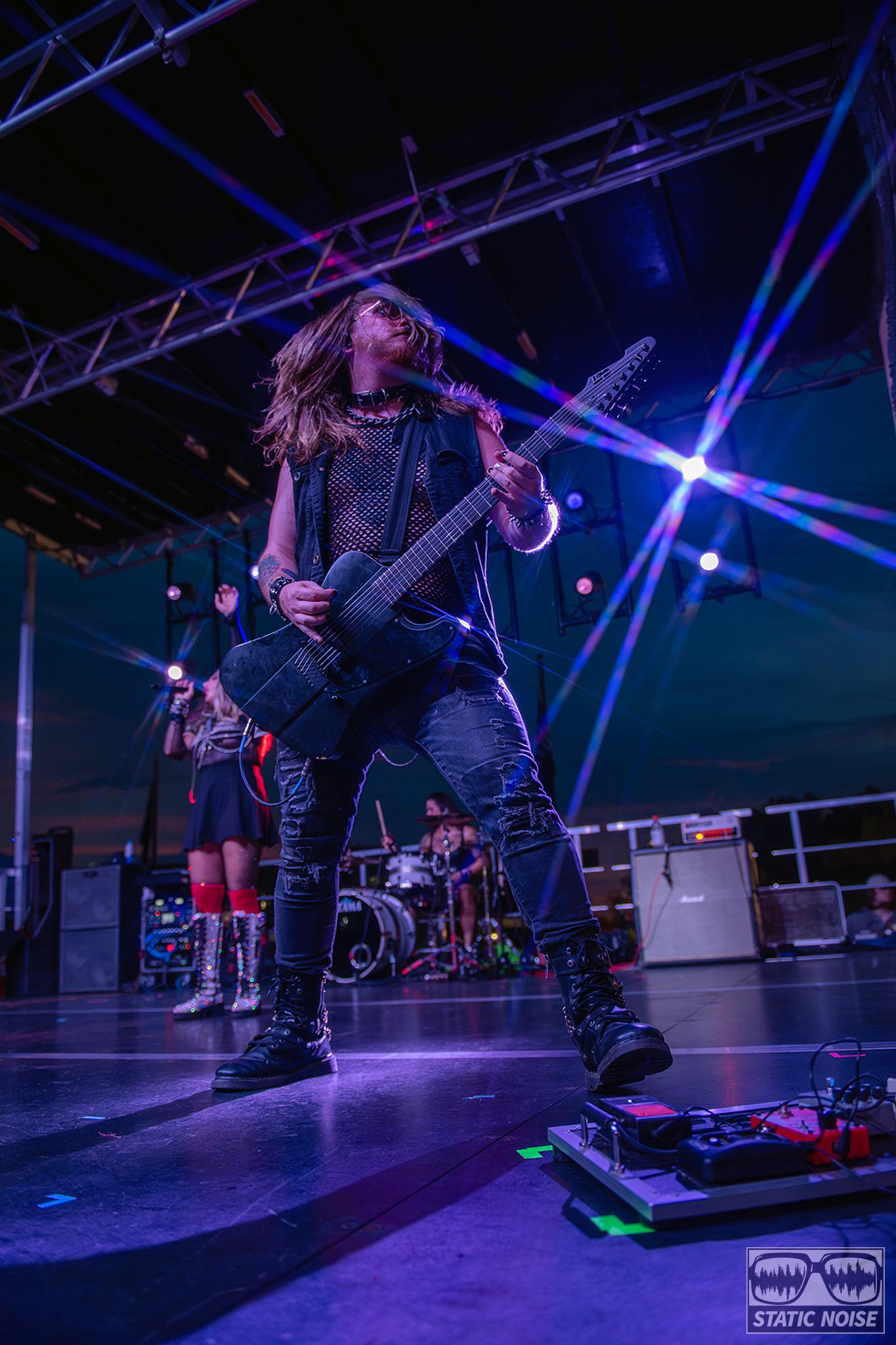
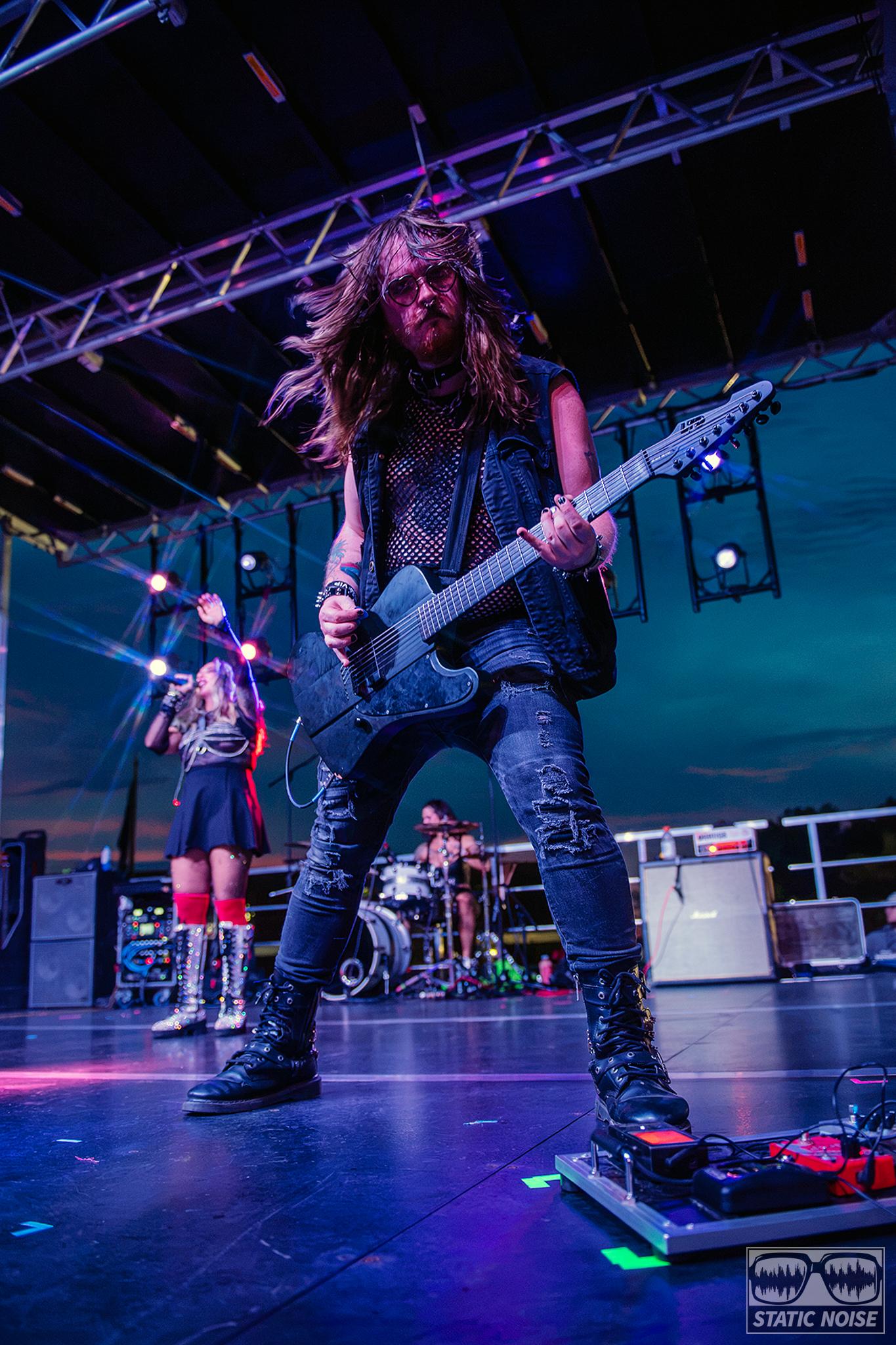










Storms Within Live at the Rock & Roll Hall of Fame’s Women in Metal: You Will Know My Name exhibit Opening Photo Gallery