Review By Rebecca Clark | Photos courtesy of Tyler Conrad
There are some artists whose songs become so intertwined with your life that hearing them live feels like stepping back into different chapters of your own story. Tim McGraw is one of those artists. On August 1, McGraw’s 2026 Pawn Shop Guitar Tour stopped at Darien Lake, where more than three decades of country music came to life through the songs that have become the soundtrack to countless moments for generations of fans. From a stripped-down acoustic opening to a full-blown country-rock set and a deeply personal encore, McGraw spent the night reminding the crowd why his music has endured for so long.
When McGraw first walked onto the stage, he did something that immediately made the night feel different. Rather than coming out with the full force of a country-rock production, he stepped out with an acoustic guitar, stood at the front of the stage for a moment and simply let the crowd erupt before launching into “Forget About Us.”
It was the beginning of an acoustic set, something McGraw explained they had never done to open a tour before, and it gave the first portion of the night an intimate, stripped-down feeling that allowed the songs, the band and the audience to take center stage.
That connection with the crowd was obvious from the beginning. During “Just to See You Smile,” McGraw encouraged everyone to sing along, turning the microphone toward the audience and grinning as thousands of voices came back at him. At one point, he looked toward the lawn and said, “I see you back there,” making sure even the fans furthest from the stage knew they were part of the show.
McGraw seemed genuinely energized by the audience’s response throughout the night. When the cheering died down, he encouraged everyone not to stop and continued pointing toward fans throughout the performance. He repeatedly handed songs over to the crowd, and it was clear that hearing them sing back was one of his favorite parts of the evening.
The acoustic portion included “Where the Green Grass Grows,” complete with McGraw and his guitar player stomping on a wooden box to add percussion. He also played “My Best Friend,” a song he admitted sits a little higher vocally than where his voice is these days. “I didn’t think about that then,” he joked. But he sang the song and crushed it.
There was also a little motivation behind bringing the song back. McGraw explained that his wife, Faith Hill, had requested it, adding with a laugh that the rewards are worth it to sing it.
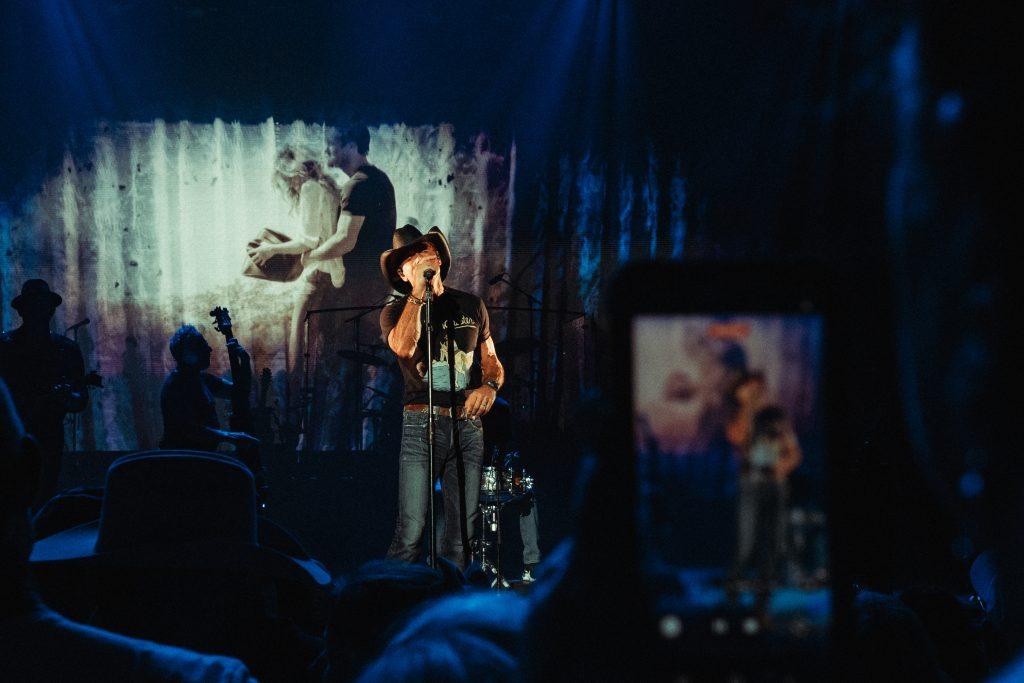
Images of McGraw and Hill appeared on the screen behind the stage during the song, and at the end, McGraw turned around, looked at the photos and pointed toward the images of himself and his wife. It was a small moment, but one that reflected just how much he loves his wife and how much his personal life and career have become intertwined.
Then came a trip back to 1993. Introducing “Don’t Take the Girl,” McGraw reflected on the early days of his career and recalled playing the song at a small club in Houston, Texas. The room was tiny, but the reaction to the song was anything but.
He remembered the entire crowd singing every word and looking over at his guitar player at the time, Darran Smith, who has since passed away.
“And we just could tell that our world was about to change,” McGraw recalled. And it did. “Don’t Take The Girl” became one of the songs that helped change the trajectory of his career, and McGraw made sure to credit the people standing in front of him for being part of that journey.
“And all because of this song and because of you guys,” McGraw said. Hearing that song live again was such a treat for longtime fans.
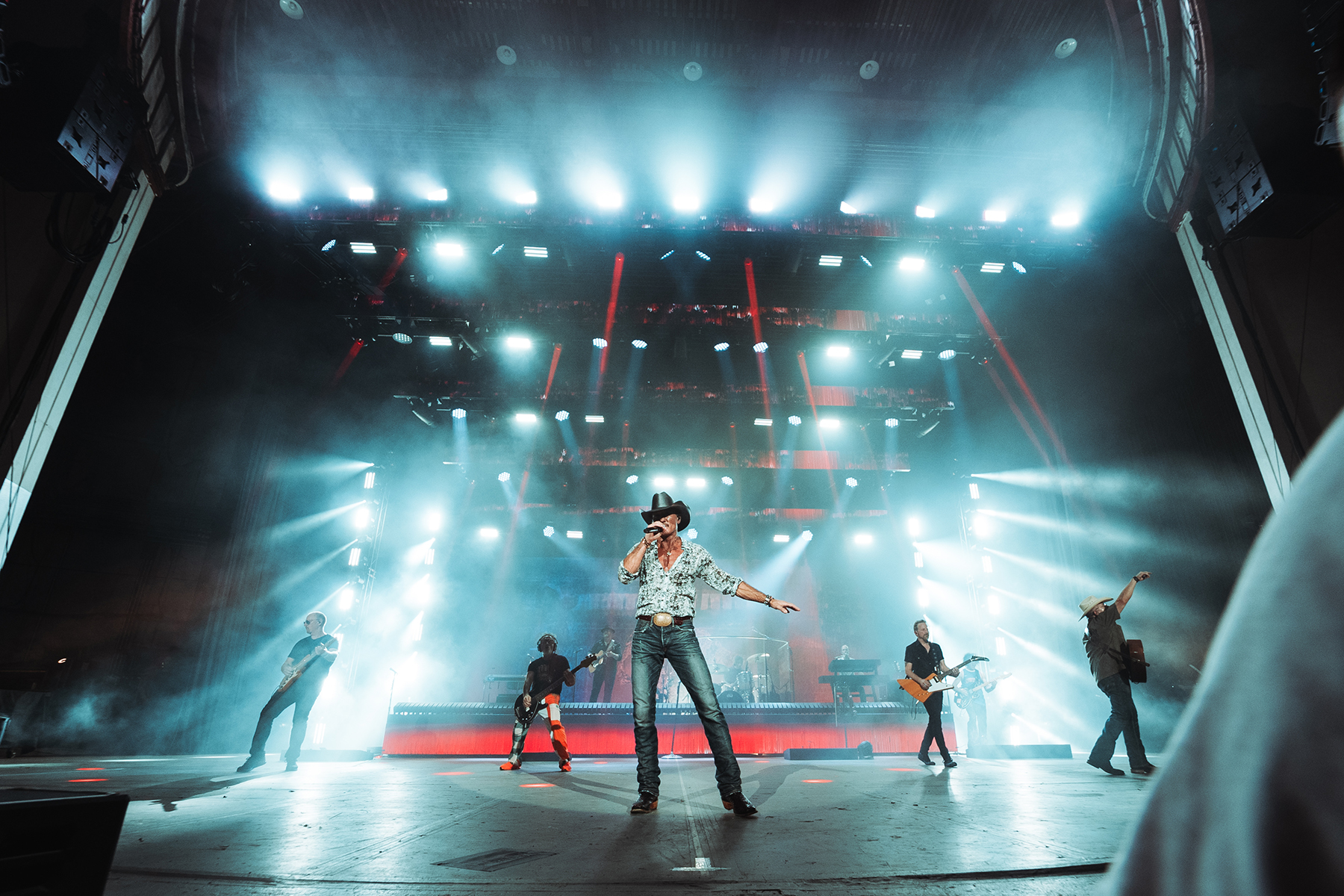
After a short break to allow the band to get ready, the acoustic intimacy gave way to a much bigger, rock-country sound. McGraw returned in a new shirt with an electric guitar, kicking off the next portion of the show with songs including “Real Good Man,” “Indian Outlaw” and “Something Like That.”
“Something Like That” had the crowd singing every word back to him. McGraw moved toward the edge of the stage, interacting with fans as they shouted the lyrics back at him.
He also took some time to talk about his relationship with the venue and his history of touring. He admitted he didn’t remember exactly how many times he’d played there, but he always looked forward to coming back. From there, he shared the story behind the name of the tour and one of the things that helped shape him as a songwriter: a pawnshop guitar.
McGraw explained that he started writing songs with a guitar he bought at a pawn shop, so he decided to write a song about it. Behind him, the screen played old photos and videos from his early days, including footage featuring a comically large old cell phone that served as a reminder of just how long ago those beginnings were.
But the story didn’t end with the song. McGraw talked about finding pawnshop guitars with John and said he wanted to give someone else the same kind of opportunity that his own pawnshop guitar had given him. They found a young girl in the crowd, brought her up to the front row and gave her a guitar. McGraw made a deal with her and her father: she had to promise she would learn how to play it.

He signed the guitar, tucked a pick into it and handed it over. It was one of several moments throughout the night where McGraw made it clear that his appreciation for his career extends far beyond performing the songs themselves.
“Southern Girl” kept the energy high, with clips of women from previous shows singing along appearing on the screen behind him. McGraw had the crowd raise their arms and wave along, turning the entire venue into part of the visual production.
“Song for America” shifted the mood again. McGraw spoke about having traveled all over the world but said there was nowhere he’d rather be than here. Even when he briefly forgot the words and laughed his way through it, he didn’t let the mistake interrupt the moment.
Behind him, imagery of American cities, sunsets and star-filled skies filled the screen before fireworks appeared, creating one of the night’s most visually striking moments.

Throughout it all, McGraw continued to express gratitude for the fans who have kept him doing this for so many years. That gratitude became especially personal during the encore.
Before performing “King Rodeo,” McGraw opened up about the physical challenges he has faced over the last several years, including back surgery and knee replacement surgery. He admitted there was a point when he wasn’t sure if he would even return to touring.
“I love my job, and you guys have given me so much,” McGraw told the crowd.
He went on to credit country music with giving him his career, his band and, most importantly, his wife and their three children. “Without country music, I would not have my wife,” he said.
McGraw explained that while he was recovering and writing during that difficult period, he wasn’t sure what the future of his career would look like. He wrote “King Rodeo” during that difficult time, but its meaning changed as he recovered.
“I wrote this song during a bad period,” he explained, describing how it has now become an anthem for him and a reminder to keep moving forward after getting knocked down. He acknowledged that everyone has difficult things happening in their lives and said what matters is learning how to get back up and keep going.
The performance that followed was beautiful and stripped down. McGraw sat on a bar stool with the piano player behind him while fans illuminated the venue with the lights from their phones. After an evening filled with big hits and huge production, the intimate performance offered a completely different kind of connection.
McGraw thanked the crowd for indulging him and then returned to the music.
“The Cowboy in Me” brought another nostalgic visual moment, with imagery from 1883 filling the screen behind him, which was a fitting nod to the series in which he starred alongside Hill and another chapter of his career outside of music.
Then came “Humble and Kind.” As he had done throughout the evening, McGraw got the audience singing. But rather than simply letting them sing along with him, he stopped and listened to them. He thanked everyone for being there and encouraged the crowd to sing a verse.
McGraw ultimately ended the night with “Truck Yeah,” sending the crowd home on a high note.
After more than three decades in country music, McGraw doesn’t seem to take any of it for granted. There were the hits fans came to hear, the stories that connected those songs to different chapters of his life, and plenty of opportunities for the audience to become part of the performance.
But underneath all of it was something much simpler: gratitude.
McGraw knows what these songs have given him. He knows what the fans have given him. And judging by the way he repeatedly stopped to listen as thousands of people sang his words back to him, he genuinely loves his fans and country music.